


Population Tendency
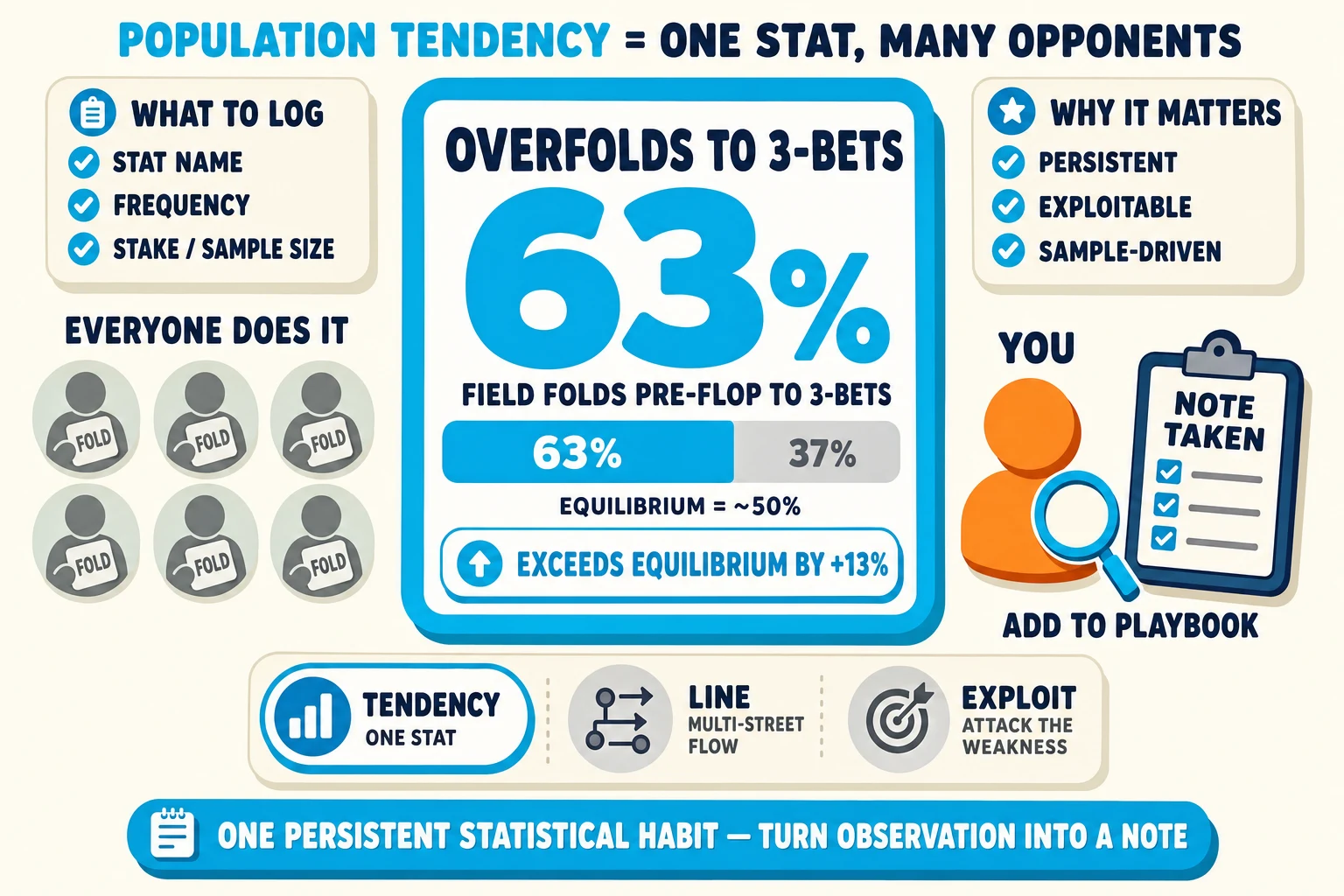
A statistical habit shared by most players in a pool, like overfolding to 3-bets. Persistent and exploitable, even when individual reads are thin.
Population Tendency
What “Population Tendency” Means at the Table Population tendency describes the typical behavioral patterns and statistical habits of the field. Studying these habits reveals predictable leaks you can exploit beyond strict GTO play. Because many players don’t change quickly, these tendencies form a durable edge you can apply across sessions.
Typical Preflop Tendencies to Watch Many players open too many hands, especially from early position. Open-raise means the first raise into the pot preflop. That creates large pots where the opener is out-of-position after the flop with marginal holdings. Example: an early-position player opens with A9o or KQo - hands often dominated postflop.
Poker Skill’s UTG: Raise or Fold lesson teaches the tighter side of this, folding offsuit A9 under the gun because it runs into better aces behind you.
Conversely, some players play extremely tight, folding marginally strong hands and defending only with premiums like JJ+ and AK. You can exploit those players by stealing more often and applying pressure with smaller ranges.
When facing a 3-bet - a re-raise before the flop - in middling positions with about 25bb effective stacks, folds occur roughly 37.8%-51% of the time. Calls are more common than reraises, making wide 3-bets and well-timed squeezes profitable.
How Opponents Commonly Respond to Aggression Average players tend to respond passively to preflop aggression, calling more than reraising or shoving. Calling all-ins varies by situation, often ranging from roughly 28% to just over 50%. These numbers suggest many players avoid risk unless they hold very strong hands.
This passive profile creates clear opportunities:
- Excessive folding to 3-bets or shoves lets you steal blinds and win pots uncontested from late position.
- Opponents who call too much but rarely reraise are easy to exploit by value-betting thinner postflop.
Recording Tendencies and Using Notes Take short, specific notes during sessions; they convert observations into profit.
- Track who open-raises from which positions and who limps. Example notes: “EP opens wide” or “limps MP often.”
- Flag 3-bet habits: “3-bets wide BTN” or “folds vs 3-bet.”
- Label player types: “frequent folder,” “sticky caller” (calls too much), “aggressive raiser.”
Keep notes brief - one-line tags you can read quickly. Use them to shape immediate decisions: widen steal ranges versus frequent folders; tighten versus aggressive 3-bettors.
Tilt, Adjustment Failures, and Strategic Takeaways Tilt (emotional play after a bad beat) and failure to adjust are common. Players chase losses or play looser after setbacks, producing predictable mistakes like overcalls or reckless shoves. Many recreational and weak regulars seldom adapt strategy based on opponents or outcomes, so your adjustments pay off.
Practical strategic plan against the average field:
- Play tighter open-raising ranges versus early-position leakiness.
- Use controlled aggression: 3-bet and steal from late position more often, but avoid marginal calls.
- Exploit notes: target players who fold too much or call too wide.
- Watch for tilt signals and tighten up when opponents become emotionally erratic.
Quick checklist
- Log open-raising and 3-bet frequencies for regular opponents.
- Target players who fold too much to aggression; widen steals from late position.
- Watch for tilt signals; tighten ranges versus erratic players.
- Prefer controlled aggression over marginal calls in typical population matchups.