


Short Stack
A "short stack" is a player with few big blinds relative to the blinds or table average. Big blind refers to the larger forced bet posted each hand. Short stacks have limited bet-sizing and reduced maneuverability postflop; they cannot small-ball effectively (small bets across streets to apply pressure). Those limits push decisions toward shoving all-in or folding more often. Shove-or-fold simplifies choices, forces opponents to fold or commit chips, and increases reliance on fold equity - the chance opponents fold to your shove. Short stacks use timely aggression to double up or steal blinds instead of grinding through multi-street play.
Short Stack (No-Limit Texas Hold’em)
What a “Short Stack” Means and Why It Matters
A “short stack” is a player with few big blinds relative to the blinds or table average. Big blind refers to the larger forced bet posted each hand. Short stacks have limited bet-sizing and reduced maneuverability postflop; they cannot small-ball effectively (small bets across streets to apply pressure). Those limits push decisions toward shoving all-in or folding more often. Shove-or-fold simplifies choices, forces opponents to fold or commit chips, and increases reliance on fold equity - the chance opponents fold to your shove. Short stacks use timely aggression to double up or steal blinds instead of grinding through multi-street play.
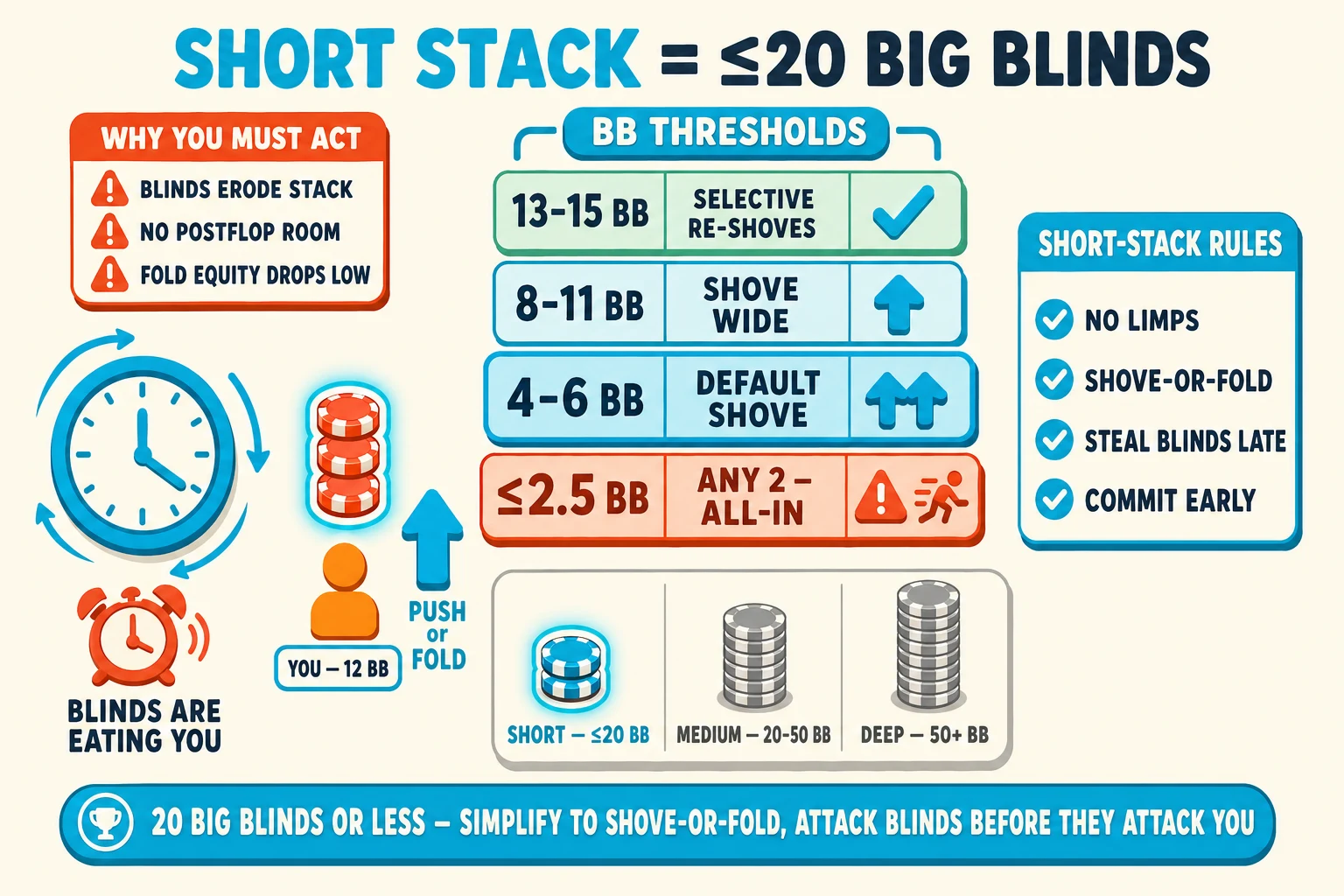
Big-Blind Thresholds and Recommended Immediate Actions
- 13-15 big blinds Look for re-raising all-in spots versus loose open-raisers. Selective shoves can pick up uncontested pots while retaining some postflop options.
- 8-11 big blinds Increase shove frequency. Open-shove to steal blinds or re-shove all-in against early opens with premium or decent-equity hands.
- 4-6 big blinds Default to all-in as your primary action. Push with pocket pairs, decent aces, and hands near 50/50 equity when called, especially if much of your stack is committed.
- 2.5 big blinds or less All-in is the only practical move. Hand selection becomes secondary to survival because folding often leaves you effectively blinded out.
Core Short-Stack Strategy: Shove-or-Fold and Hand Selection
Keep decisions simple around 5-10 big blinds: favor all-in or fold to avoid marginal postflop spots. Widen shove ranges in late position and the blinds when fold equity is high. From button and cutoff include many pairs, aces, suited connectors, and broadway cards. Defend the blinds aggressively; if a large part of your stack sits in the blind, pushing is usually correct. Use targeted aggression: a well-timed shove often wins the pot uncontested or forces a flip to double your stack. Waiting for premiums lets antes and blinds erode your chips.
Example: On the button with about nine big blinds, open-shoving a suited ace or a medium pocket pair often makes sense to steal blinds and antes.
Poker Skill deals every preflop lesson at 100 big blinds, so it teaches the deep-stack game a short stack no longer gets, the open-raise, the 3-bet and the flop that follows.
Tournament-Specific Adjustments: Bubbles, Pay-Jumps, and Risk Premium
Tournament dynamics change short-stack math. Near bubbles or pay-jumps, opponents tighten and you must demand more equity to call an all-in. That extra required equity is the risk premium concept. Tighten calling ranges and be more selective when calling shoves in those spots. At the same time, apply pressure with shoves if opponents avoid marginal confrontations. Conversely, if the table calls light, your shoves lose fold equity and you should require stronger hands.
Practical Shove/Reshoving Guidance and Common Situations
- From late position or the button: open-shove frequently to steal blinds and antes.
- From the blinds: shove wider when a large portion of your stack is already committed.
- Facing an early-position raise: prefer re-shoving all-in with strong or high-equity hands rather than flat-calling into an unsettled pot.
- If calling a raise would leave you at or below about 2.5 big blinds, push instead of calling; survival and the chance to double take priority.
Quick checklist
- Know your current big-blind count and which band you’re in right now (13-15 / 8-11 / 4-6 / ≤2.5).
- Switch to a shove-or-fold mindset once you fall below about ten big blinds.
- Widen shove ranges in late position and when defending the blinds.
- Factor tournament context (bubble or pay-jump) into how much equity you need to call.
- Avoid passive plays like limping or calling that let blinds eat your stack without maximizing fold equity.