


Aggressive Regular
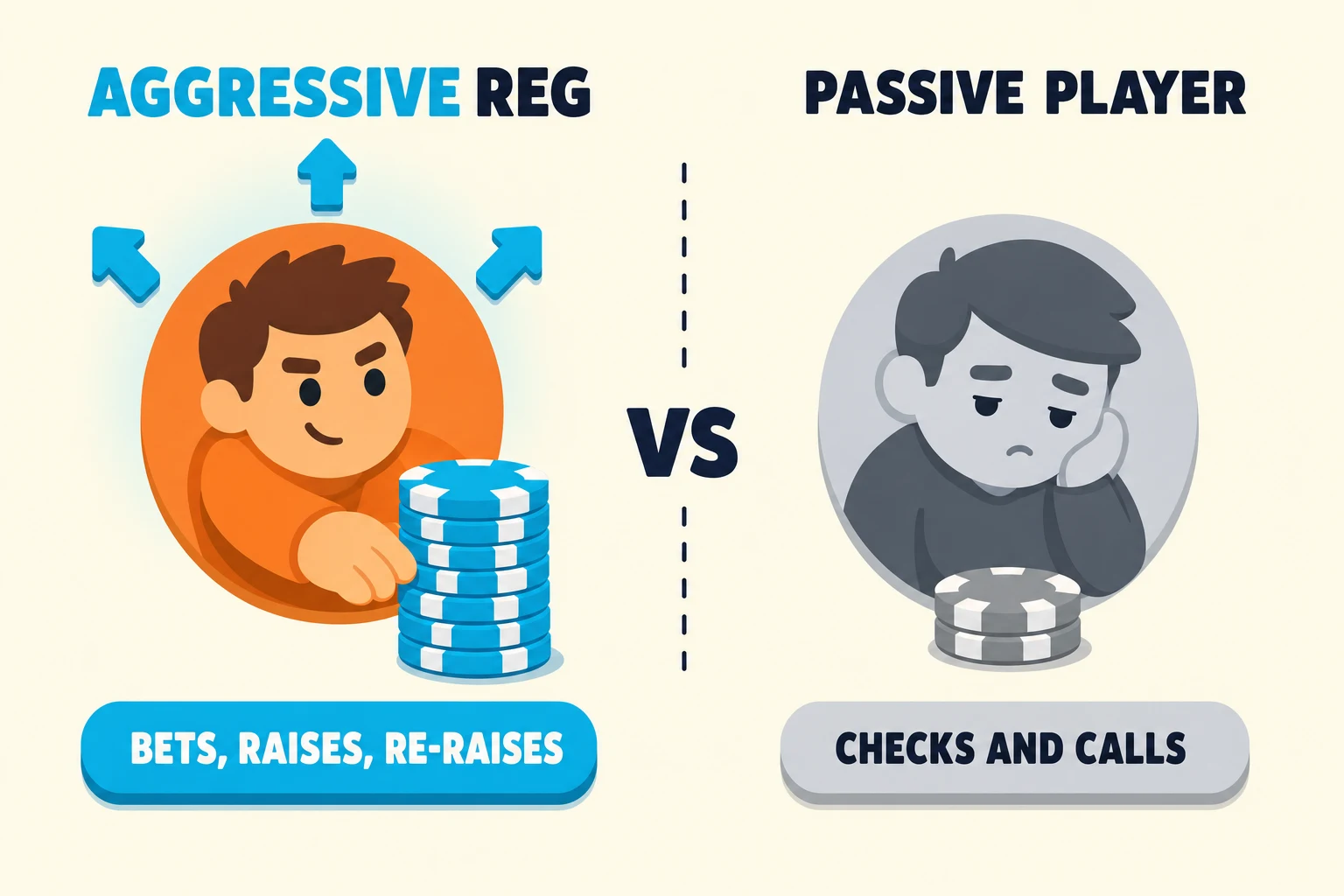
A winning regular who leans on bets, raises, and re-raises rather than calls. Builds pots when ahead, generates fold equity when behind, and rarely flat-calls marginal hands.

Practice this in Poker Skill. The flop lessons drill both kinds of pressure: K♣ K♦ bets to charge the draws on Q♣ J♣ 4♦, and A♥ Q♥ semi-bluffs its big draw on 5♥ 4♥ 3♦.
Get the free appAggressive Regular
What an aggressive regular is
An aggressive regular prefers betting and raising over calling to seize initiative and control pots. In No-Limit Texas Hold’em, where players may wager any portion of their stack, this style lets them threaten large amounts and apply pressure each betting round. You’ll often find aggressive regulars in higher-stakes cash games and tournaments because pressure forces opponents into difficult decisions and frequent folds. Rather than checking or flat-calling marginal hands, they push the action to build pots when ahead and generate fold equity when behind.
Core tactics: betting, raising, and re-raising
Primary pre-flop tools include open-raising, three-betting (re-raising an initial raiser), and occasional four-betting (re-raising after a three-bet). They open wider from late position and tighten in early seats while keeping the aggressive approach. Post-flop they use continuation bets (c-bets, the flop bet by the last pre-flop aggressor), semi-bluffs (betting with a draw that can improve), and pure bluffs to convert fold equity into pots. Example: you raise pre-flop, miss the flop, but hold a strong diamond draw. A c-bet here is a semi-bluff that sometimes wins immediately and retains outs when called. Position matters: acting after opponents provides information and lets aggressors widen playable ranges, turning marginal holdings into profitable plays.
Table dynamics caused by aggression
An aggressive regular reshapes the table. Opponents often tighten, folding marginal hands instead of contesting pots, which raises the aggressor’s fold equity. Aggression also inflates pots and forces tougher decisions, with more frequent raises and bigger confrontations. Reputation builds over time: opponents start assuming aggression equals strength, a tendency the reg can exploit with well-timed bluffs. Skilled opponents fight back with check-raises, slow-plays, and stronger 3-bet ranges, which keeps the strategic picture moving.
Balancing aggression: risks and anti-exploitation
Unbalanced aggression becomes predictable and exploitable. Mix tight and loose aggression so opponents can’t tag every bluff or value-bet. Vary bet sizes and frequencies, sometimes betting small with a draw, sometimes larger, to deny simple counter-strategies. Watch how others adjust: if opponents call down lighter, tighten value ranges and bluff less. If they fold too much, increase bluff frequency. Protect implied odds (the future winnings you can extract when you hit) by avoiding over-bluffing against callers who will pay off big hands.
Adapting to and exploiting aggressive regulars
- Use selective slow-plays and well-timed check-raises. Let them c-bet into you with a strong hand, then check-raise to extract value or force errors.
- Narrow calling and three-betting ranges in early position; widen in position to use their aggression against them. In position you can call more speculative hands and raise on later streets.
- Observe patterns: if they bluff predictable turn or river lines, punish with value-heavy calls or trap lines by checking strong hands to induce bluffs.
Quick checklist
- Note each aggressive regular’s positional tendencies and bet frequency.
- Alternate tight and loose aggression in your own game to remain unpredictable.
- Prioritize playing back from position to extract value or neutralize pressure.
- Use three-bets and continuation bets selectively, not mechanically.
- Watch for and punish predictable bluff lines with strong, value-focused responses.