


Bluff-Catcher
A bluff-catcher is a hand too weak to bet for value but strong enough to beat likely bluffs. In No-Limit Texas Hold'em these hands primarily call river bets when an opponent's range contains many bluffs. Success depends on reading three things: opponent bet sizing, betting patterns, and range composition - which hands the opponent could have. If those signals point to many missed-draw or overbet bluffs, a marginal hand can profitably call.

Practice this in Poker Skill. The Check-Call lesson catches bluffs on the flop: A♥ 7♣ calls a bet on Q♦ 7♠ 2♥ because middle pair with the best kicker beats the missed hands that are betting.
Get the free appBluff-Catcher
What Is a Bluff-Catcher?
A bluff-catcher is a hand too weak to bet for value but strong enough to beat likely bluffs. In No-Limit Texas Hold’em these hands primarily call river bets when an opponent’s range contains many bluffs. Success depends on reading three things: opponent bet sizing, betting patterns, and range composition - which hands the opponent could have. If those signals point to many missed-draw or overbet bluffs, a marginal hand can profitably call.
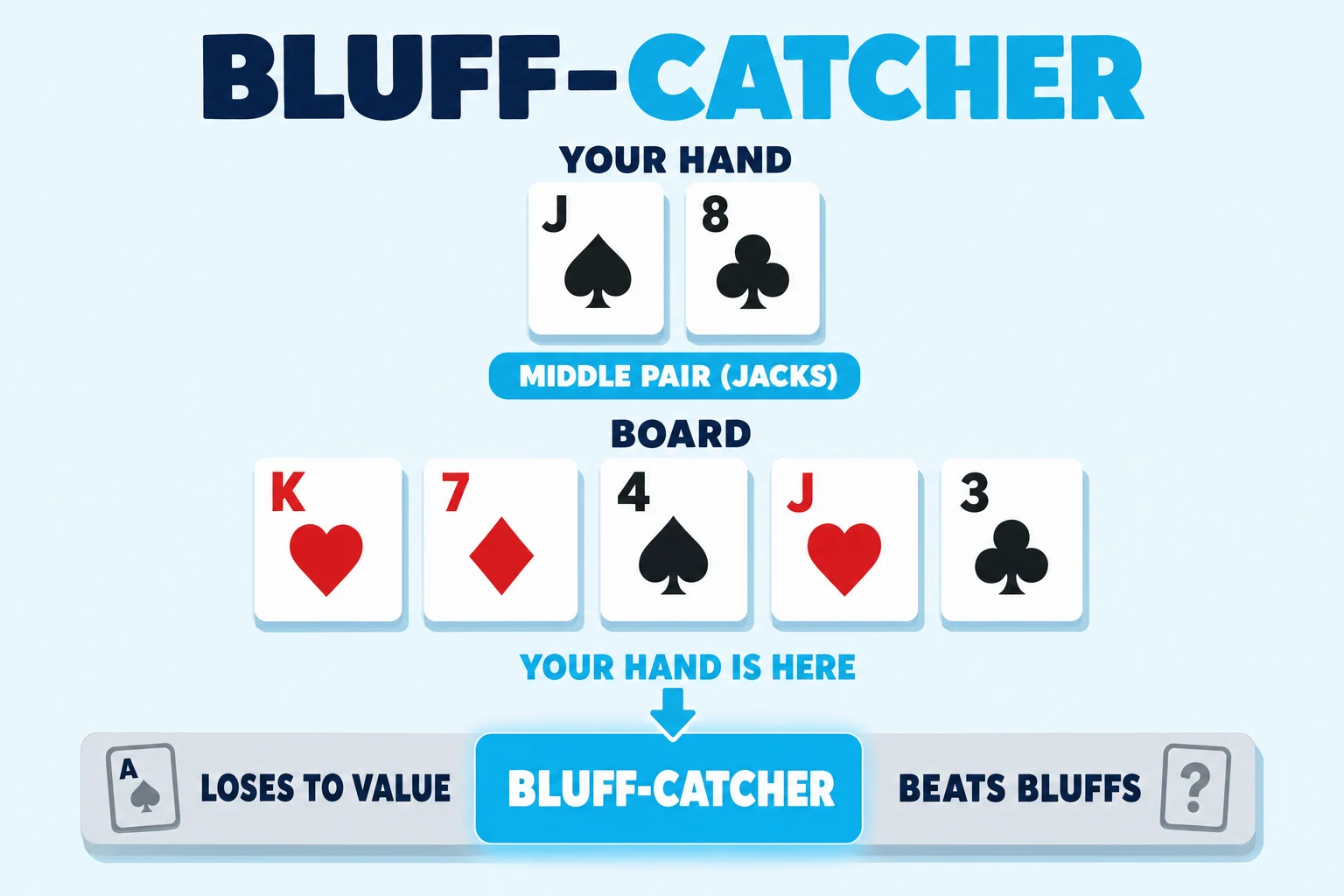
When to Use a Bluff-Catcher
Use bluff-catchers on rivers where an opponent’s range is polarized, with mostly strong value hands and pure bluffs. Polarized ranges often follow aggressive lines that either made a strong hand or continued as a bluff.
Favor calling when:
- Bet sizing implies high bluff frequency - in a balanced range, bigger bets can carry a bigger share of bluffs. Very large bets can also polarize ranges.
- The opponent’s line indicates missed draws or thin bluffs, such as check-calls or turn shoves.
- Your hand blocks more of the opponent’s value combos than their bluff combos.
Remember: bluff-catching defends against frequent bluffs; most long-term profit still comes from value betting stronger hands.
Choosing Hands: Blockers and Range Considerations
A blocker is a card you hold that reduces combinations of a specific opponent hand. For example, holding an Ace reduces some Ace-high bluff combos. Hands that do not block common bluffs can be superior bluff-catchers because they leave many bluff combos in the opponent’s range.
Blocking the opponent’s main value combos helps too, because it removes hands that beat you and leaves the range weighted toward bluffs. Evaluate multi-street dynamics: a blocker that affects the river may also have altered turn bluffs or earlier value bets.
Concrete pick: on a river with many missed straight draws, a mid pair holding none of the cards those draws were built from makes a good bluff-catcher. If your hand also holds a card from their value combos, it gets better, since some of the hands that beat you are gone.
River Play and Optimal Calling Frequencies
Game theory says you must defend often enough in polarized river spots to make bluffing unprofitable. As a benchmark, facing a pot-sized river bet, defending about half of your range meets the minimum defense frequency. Use that frequency as a baseline, not an absolute rule. Mix calls and folds so opponents cannot profitably bluff with any two cards.
Solver Guidance and Practical Adjustments
Solvers compute full-range, balanced calling strategies and reveal which hands act as bluff-catchers at specific frequencies. Study solver patterns to see how blockers and bet sizes alter optimal calls, then simplify patterns for live play. Adjust solver recommendations to opponent tendencies: call more versus over-bluffers and tighten versus under-bluffers.
Common Mistakes and Discipline
Common errors include overcalling on emotion, misreading bet sizes, and ignoring blocker effects. Bluff-catching is protective; disciplined calls prevent losses more than produce big wins. Folding too often from fear or calling too often from hope both lose money.
Checklist:
- Confirm the opponent’s range is polarized and contains many bluffs.
- Evaluate bet sizing and prior betting patterns for bluff indication.
- Check blocker effects: do your cards block the opponent’s bluffs or value hands?
- Remember solver frequencies, defending roughly half your range versus a pot-sized river bet, and make disciplined calls.