


Bluff-to-Value Ratio
The bluff-to-value ratio measures the number of bluffs versus value bets in a betting range. A value hand is one you expect to be ahead of your opponent's calling range. A bluff typically loses at showdown but can force better hands to fold. Balancing bluffs and value prevents opponents from exploiting your betting frequency and range.

Practice this in Poker Skill. Value bets and bluffs each get a lesson, Value Betting and Bluffing & Semi-Bluffing, and then a capstone mixes them, sorting each flop hand by the job a bet would do for it.
Get the free appBluff-to-value ratio
What the bluff-to-value ratio means
The bluff-to-value ratio is the share of bluffs versus value bets inside a betting range. A value hand expects to be ahead of villain’s calling range. A bluff usually loses at showdown but can fold out hands that beat you. Mixing the two in the right proportion is what stops opponents from playing you face-up.
If you never bluff, villain folds the marginal hands that would have paid your value bets. If you bluff too often, villain calls wide and your bluffs go to the cleaner. The right mix sits in the middle, and the math behind that middle comes straight from the price your bet offers. Picking the specific combos that fill the bluff side is a separate job, covered in which hands to bluff.
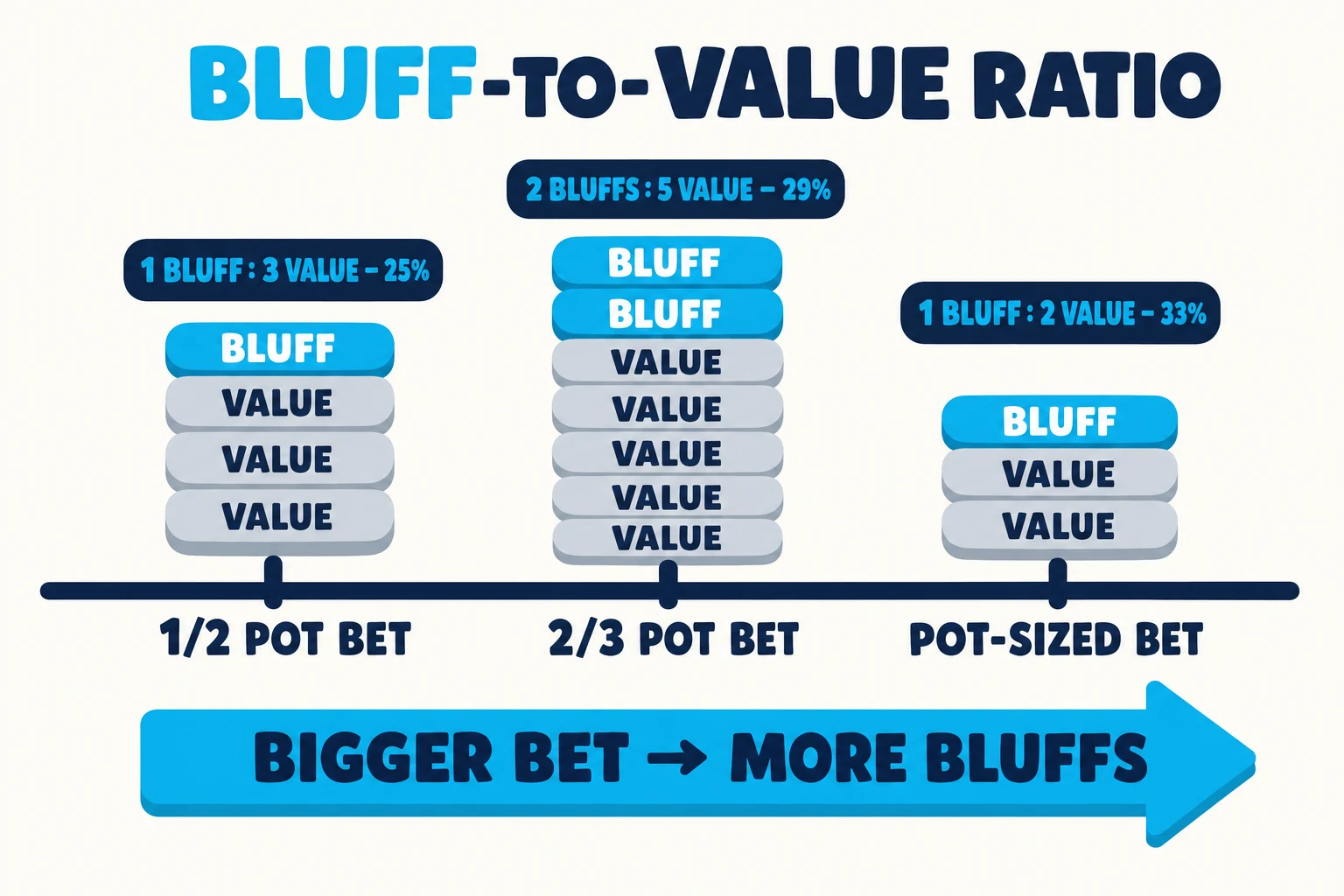
How to calculate the ratio from bet size
Translate the pot odds you give a caller into the bluff frequency that keeps them indifferent.
- Find the caller’s break-even threshold from your bet size. A half-pot bet gives 3-to-1, meaning they need 25% equity to break even.
- Convert that threshold into a bluff-to-value ratio. At 3-to-1, use roughly one bluff per three value bets, or about 25% of the betting range as bluffs.
- Apply the same logic to other sizes. Match the ratio to the break-even threshold the size produces.
For example, you bet half pot on the river and give villain 3-to-1. They need to win 25% of the time to make calling break even. Bluff more than 25% of your betting range and they call profitably. Bluff less and they fold too often, leaving your value bets underpaid.
Using the ratio on the river
The river is where the bluff-to-value ratio matters most. River bets are pure value or pure bluff; no future card can change the picture. Calling ranges have narrowed and become readable, so the balance has to be tighter than it was on earlier streets.
Bluff too few rivers and villain folds the hands that would have paid your value bets. Bluff too many and good opponents call you down. The target is the bluff frequency that leaves villain indifferent between calling and folding at the price you’re offering.
Adjusting your ratio for different bet sizes
Bet size changes the price and therefore the right bluff share.
- Smaller bets give villain better odds, so the range needs fewer bluffs.
- Tiny bets only need a token bluff frequency to keep folds costly.
- Larger bets give villain a worse price, so they support a higher bluff share without becoming exploitable.
- Match your bluff frequency to the price your size offers.
- If you change sizes, recalculate the break-even threshold and the corresponding bluff:value split.
Practical signs you’re under- or over-bluffing
The table tells you whether the mix is right.
- Villain folds too often to your value bets: you’re under-bluffing. Add bluffs or change your sizing.
- Villain calls your bluffs and shows down winners: you’re over-bluffing. Cut the bluff combos.
- Strong hands keep going to showdown without action on the river: the range is unbalanced toward value. Bluff more on the runouts that fit, or change sizes so the value bets get paid.
Quick checklist
- Calculate opponent break-even call frequency from your bet size before choosing bluff frequency.
- Use the 1 bluff per N value bets rule, where N equals the caller’s break-even odds, for example 1:3.
- Prioritize balance on the river, where ranges become most polarized.
- Reduce bluff share with smaller bet sizes; increase it with larger bets.
- Watch opponent reactions: high fold rates -> add bluffs; high call rates -> cut bluffs.