


Double Barrel
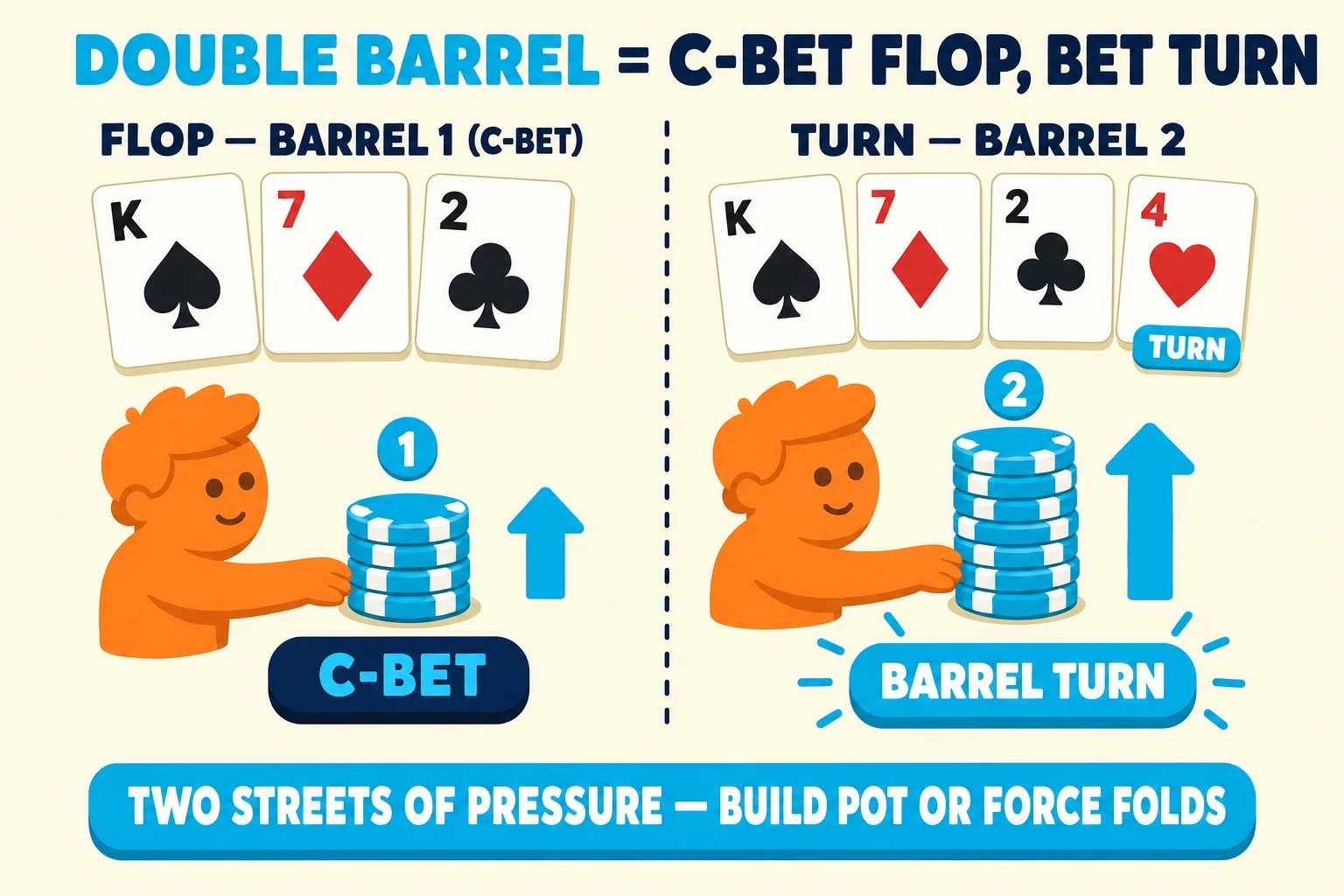
A double barrel is betting the flop (a continuation bet, or c-bet) and betting again on the turn after the flop bet is called. A c-bet is a bet by the player who took the lead preflop to continue representing strength. You can double barrel as a value line with strong hands to extract chips or as a bluff to force folds later. The goals are concrete: extract value, build the pot, or generate fold equity. Example: You raised preflop and c-bet the flop. Opponent calls. If you bet the turn as well, that is a double barrel - either to get paid by worse hands or to fold out missed hands.
Practice this in Poker Skill. The lessons on good and bad barrel cards test the turn card by card: an ace that also brings your flush draw fires the second bet, while a king that gives 10♥ 9♥ nothing on 3♥ 4♣ 5♠ is where you stop.
Get the free appDouble Barrel
What a double barrel is
A double barrel is betting the flop (a continuation bet, or c-bet) and betting again on the turn after the flop bet is called. A c-bet is a bet by the player who took the lead preflop to continue representing strength. You can double barrel as a value line with strong hands to extract chips or as a bluff to force folds later. The goals are concrete: extract value, build the pot, or generate fold equity. Example: You raised preflop and c-bet the flop. Opponent calls. If you bet the turn as well, that is a double barrel - either to get paid by worse hands or to fold out missed hands.
How board texture guides the decision
Board texture - how connected, coordinated, or draw-heavy a board is - dictates whether and how you should continue.
- Static boards (rarely change equities), e.g., J♠6♥6♦: most turn cards won’t alter relative hand strengths. Use small turn bets (about one-third pot) because many hands that called the flop remain weak and foldable.
- Dynamic boards (many turn cards shift equities), e.g., 9♥8♥4♦: many turn cards complete draws or add overcards. Use larger turn bets (about two-thirds pot) when barreling to apply pressure or extract thin value, since opponent ranges are likelier to improve.
Check whether the specific turn card improves likely opponent ranges before barreling. If it does, reduce bluff frequency or size.
Which hands to double barrel (polarization and selection)
After a flop c-bet, your turn range often polarizes: very strong made hands and pure bluffs dominate. Medium-strength hands (second pair, weak top pair) are often checked back on the flop and thus occur less in your turn-barrel candidates.
- Value barrels: made hands that still beat the opponent’s calling range - for example, top pair with a good kicker or better - bet for value to build pot and protect.
- Bluff barrels: hands with little showdown value but some equity against parts of the opponent’s range (backdoor draws, air). Use these only when fold equity is sufficient.
Example: You c-bet K♣Q♣ on K♦7♣4♦ and opponent calls. On a blank turn like 2♠, KQ can barrel for value and fold out weaker pairs. If the turn completes a club, consider checking.
Position dynamics and opponent responses
Being in-position (IP) - acting after your opponent - makes double barrels easier. IP can use frequent small barrels on static runouts to fold out weaker out-of-position (OOP) ranges that rarely improve. OOP players who called a flop c-bet usually have a condensed, weaker turn range, making them vulnerable to continued pressure. On dynamic runouts expect more check-raises or realized improvements from OOP; tighten bluffing and size up when value is your goal.
Sizing, fold equity, and practical adjustments
Simple sizing rules:
- Small on blanks (≈1/3 pot) to pressure without overcommitting.
- Larger on scare or changing runouts (≈2/3 pot) to maximize fold equity or extract thin value.
- Adjust frequency and size based on reads - if opponents fold missed draws or weak pairs often, increase bluff frequency and size.
The core profitability of a double barrel depends on sufficient fold equity against the opponent’s likely turn range. Against sticky callers, favor value-heavy lines. Against fold-prone opponents, add more bluffs.
GTO considerations and simple heuristics
GTO thinking says tailor double-barrel frequency and sizing to board texture and opponent reactions rather than follow a fixed rule. Heuristics:
- Small barrels on static cards.
- Larger barrels on dynamic cards.
- More bluffs versus opponents who fold often; fewer bluffs versus aggressive check-raisers.
Quick checklist
- Confirm the turn card’s interaction with both ranges before barreling.
- Choose bet size based on board texture: small on blanks, larger on dynamic cards.
- Barrel for value when ahead; bluff only when fold equity is sufficient.
- Favor double barrels in position; be cautious out-of-position after calling a flop c-bet.