


Fold
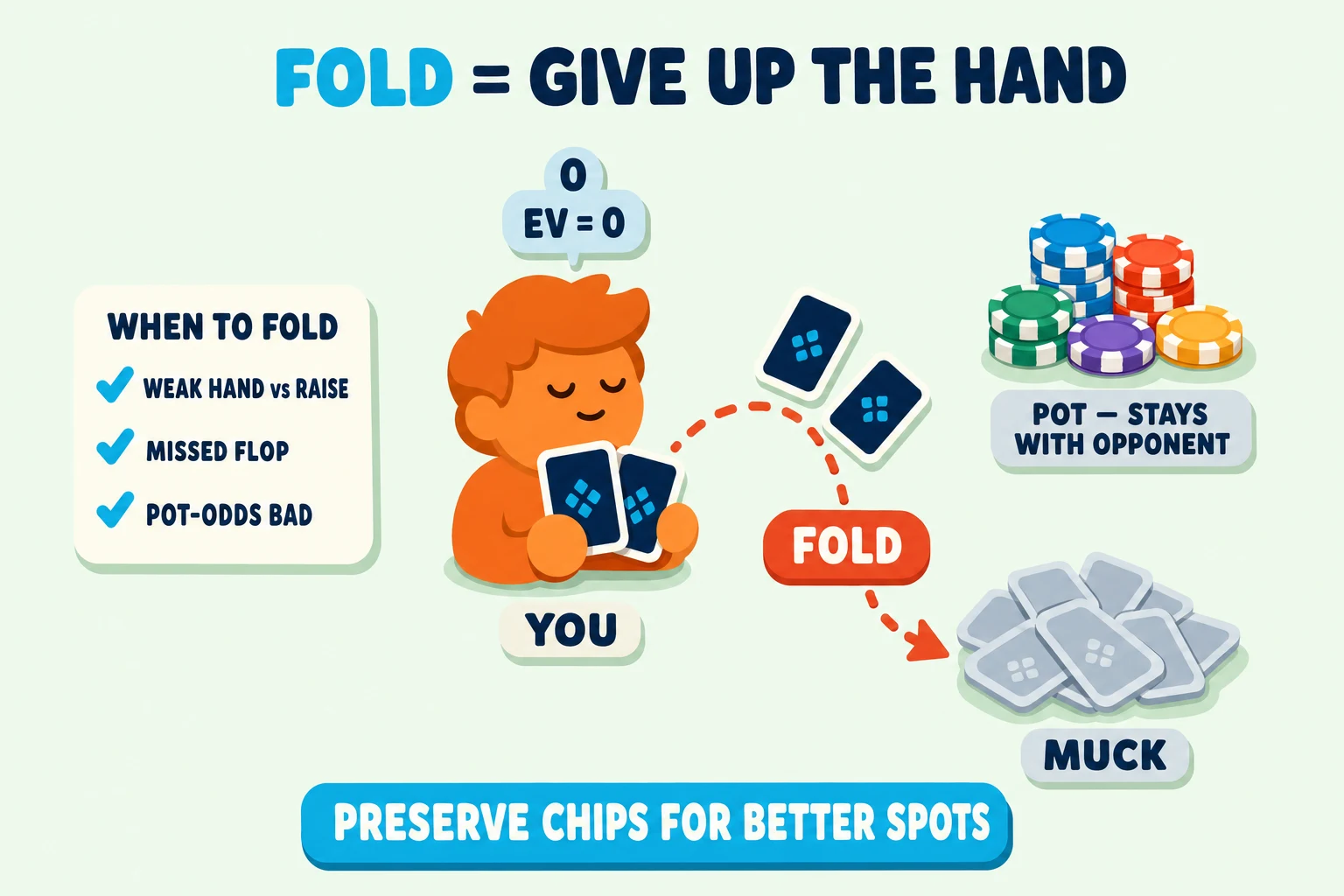
Discarding your hole cards and giving up the hand. You forfeit anything already in the pot, but you stop the bleed when continuing would be -EV.
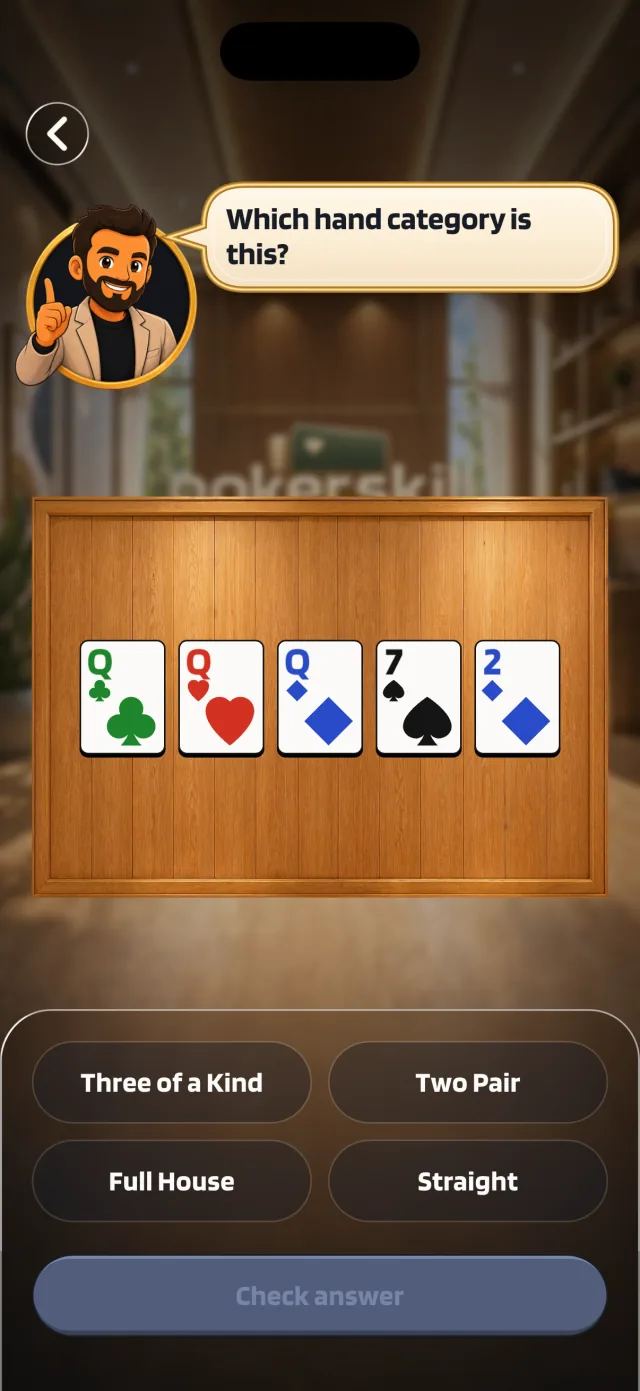
Practice this in Poker Skill. The raise-or-fold lessons make the fold an ordinary answer: from the cutoff, 8♣ 3♦ and 10♣ 2♦ are trash hands you fold and move on from.
Get the free appFold
What a fold is and what it does
A fold discards your hole cards (your private two cards) and ends your participation in the hand. When you fold, you forfeit any chips already in the pot and give up any claim to that pot. Folding is a risk-management tool: when continuing looks unprofitable, you cut the loss and preserve chips for better spots. Hand strength, pot odds (the pot size versus the cost to call), stack sizes, and the game context all feed the decision. Example: you posted the small blind, face a raise, and hold 7♣2♦. Folding ends the hand and saves chips for hands you actually want to play.
Preflop: common fold situations
At a full table, many winning players fold most hands before the flop, often up to two-thirds, because most starting hands lose value over the long run. Fold obvious weak starters: unsuited, disconnected cards (for example, 9♠2♥) and many small pairs like 22 or 44 from early position. Early position means you act near the start of the round and face more opponents afterward, so play tighter there. Fold more frequently when:
- Facing a raise from late position while you’re in early position.
- Facing a three-bet (a re-raise) unless you have clear equity or positional advantage. Example: 8♦8♣ in early position versus a button three-bet often becomes a fold without deep stacks or reads.
- Your hand has little chance to improve versus opponents’ likely ranges.
Postflop: folding to avoid costly mistakes
The flop is the three community cards dealt after preflop betting. Fold postflop when you miss the flop and the betting line represents a stronger range. In multiway pots (pots with more than two players), demand stronger holdings to continue, because marginal hands and weak draws lose value as opponents stack up. Example: you hold A♣8♣ and the flop is K♦9♠2♥. Facing a large bet from an early aggressor, folding is often correct. Fold to heavy postflop aggression unless pot odds or implied odds (the chips you can win on later streets) justify a call or raise. Chasing draws without proper odds is one of the most common, expensive mistakes in the game.
Fold vs call or raise: the EV decision
Expected value (EV) measures the average outcome of an action over time. Fold when continuing has negative EV compared to folding. Quick decision steps:
- Estimate pot odds: how much you must call versus what you can win.
- Assess your equity: how often your hand will win against opponents’ ranges.
- Compare equity to pot odds and implied odds: if equity falls short and implied odds are poor, fold. Avoid folding for free. If checking is available, weak hands keep equity and can improve without cost. Treat folding mainly as a response to a bet or raise that math and reads don’t support.
Making disciplined folding part of your strategy
Discipline in folding prevents overcommitting with marginal draws, weak kickers (your lower side card that matters in ties), or hands that can’t beat likely opponent ranges. Play selectively: enter fewer pots and wait for better spots. The mindset “tight is right” captures this patient, profitable approach. Folding protects your stack in cash games and tournaments, conserving chips for clearer edges later. Fold properly to set up more profitable opportunities down the road.
Quick checklist
- Fold when a bet or raise makes continuing negative EV.
- Fold most preflop hands, up to two-thirds at a full table, especially from early position.
- Don’t fold for free; check and realize equity when no bet is made.
- Avoid chasing draws or playing weak hands in multiway pots without pot-odds support.