


Iso-Raise
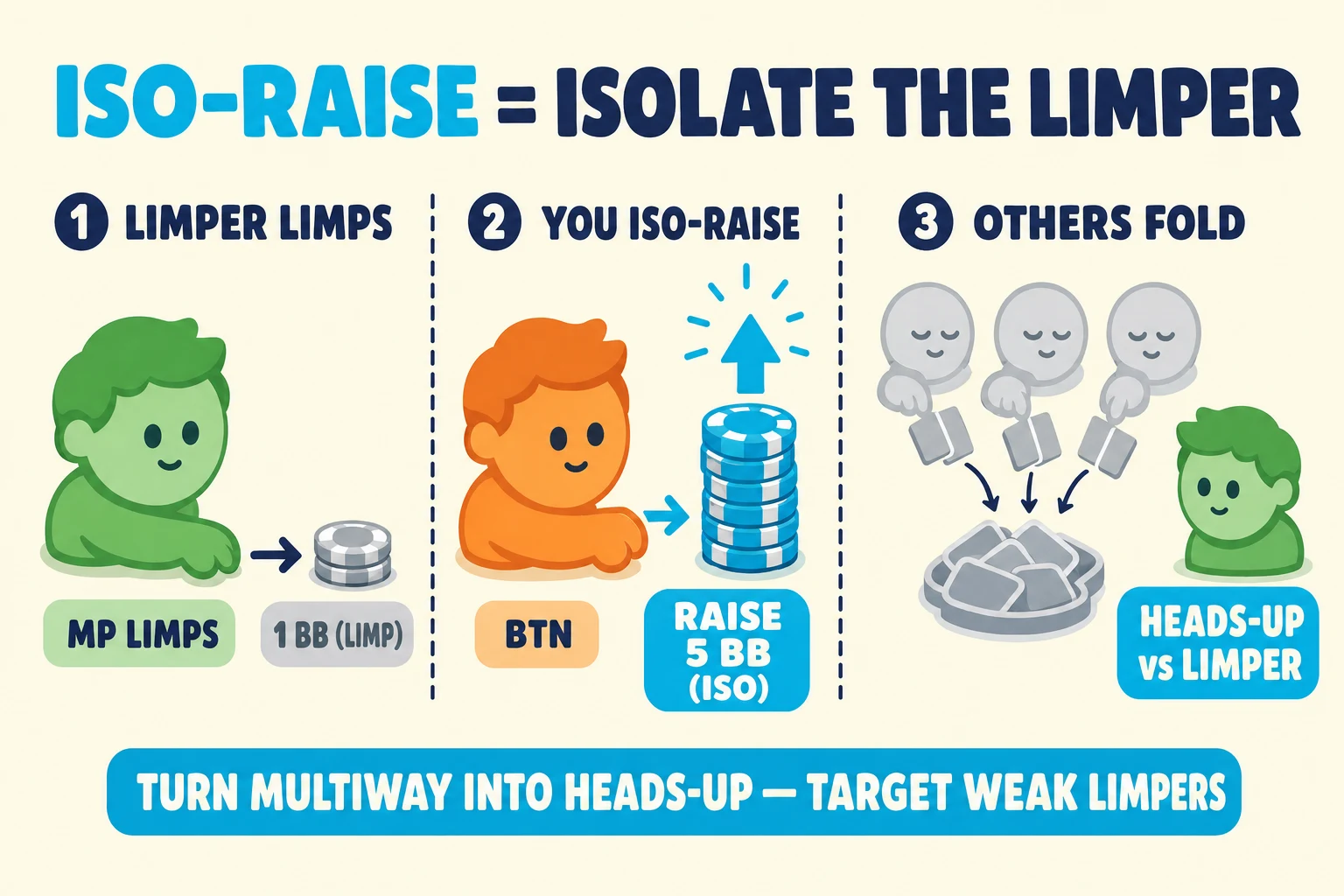
An iso-raise (isolation raise) is a preflop raise made after one or more players limp, meaning they just call the big blind. The raiser aims to isolate a single opponent, usually the weaker limper, and convert a multiway pot into a heads-up pot. Iso-raises reduce the complexity of facing several opponents and give the raiser more control over betting and pot size. Example: on the Button with AJs and a middle-position limp, raise to force out other callers and play post-flop one-on-one.

Practice this in Poker Skill. The Isolation vs Limpers lessons deal this spot from five seats, and on the button pocket tens raise the limper while pocket fours just call to keep the pot small.
Get the free appIso-Raise
What an Iso-Raise Is
An iso-raise (isolation raise) is a preflop raise made after one or more players limp, meaning they just call the big blind. The raiser aims to isolate a single opponent, usually the weaker limper, and convert a multiway pot into a heads-up pot. Iso-raises reduce the complexity of facing several opponents and give the raiser more control over betting and pot size. Example: on the Button with AJs and a middle-position limp, raise to force out other callers and play post-flop one-on-one.
Why Iso-Raising Works
Iso-raising narrows the field, which lowers variance and reduces the chance of being outdrawn by multiple opponents. In multiway pots, even strong hands more frequently lose to multiple draws; isolating removes that risk. Iso-raises also target perceived weakness, since limpers often hold speculative or passive hands and make more post-flop mistakes. Larger iso sizing builds the pot with strong holdings and increases fold equity, the chance an opponent folds to your raise, which discourages speculative callers. Example: if a player limps 76s, an iso-raise with KQ or 99 both builds value and often forces the speculative hand out preflop.
Where and When to Iso-Raise (Position & Opponents)
Position matters: iso-raises work best from late position, especially the Button (BTN) and Small Blind (SB), because those seats act later post-flop. Target limpers who fold to raises or play passively after the flop. Tighten your range against limpers who call raises frequently (sticky callers) and widen it against players who fold under pressure. When multiple players limp, be more selective: with two limpers use about the top 50% of your opening range; with three or more, restrict yourself to premium hands like big pocket pairs and strong broadways.
Sizing Guidelines for Iso-Raises
A practical rule is to raise by your standard open size plus roughly 1 big blind per limper. For example, if your standard open is 3.5 big blinds, raise to 4.5bb against one limper and 5.5bb against two. This slightly larger sizing helps isolate the intended opponent and discourages speculative calls. Larger sizing increases fold equity; if facing sticky callers who rarely fold, tighten your isolation range and include more hands that play well post-flop for value.
Hand Selection and Post-Flop Plan After an Iso-Raise
Typical iso-raise hands include pocket pairs, broadway cards (high unpaired cards like KQ), suited connectors, and strong aces. Adjust this mix by opponent tendency: expand versus fold-prone limpers and tighten versus sticky callers. Post-flop goals are simple: extract value when ahead, apply pressure when in position, and avoid bloating the pot against multiple callers. If the limper calls, switch to value-oriented lines: bet for value on favorable textures and exploit post-flop mistakes. Example line: you iso-raise to 4.5bb with 99, one limper calls, and on a K72 rainbow flop prefer a check or a small continuation bet for value and protection.
Checklist
- Target limpers who are passive or fold to raises.
- Use standard open size + 1bb per limper as a baseline for sizing.
- Tighten your range with multiple limpers; expand only versus overly fold-prone opponents.
- From late position, favor isolation to maximize post-flop leverage.