


Missed Draw
A missed draw occurs when you fail to complete a straight or flush by the river. In No-Limit Hold'em this often follows a call on the flop or turn hoping to hit a later card. Missed draws matter because they usually leave you with little or no showdown value - the hand's chance to win at showdown. That creates a clear river decision: check/fold, thin value-bet, or bluff. These spots are common and shape when and how you should attempt bluffs.
Practice this in Poker Skill. The bluff-or-check call starts on the flop in the Bluffing & Semi-Bluffing lesson, which bluffs when the board missed the caller and checks when the ace on top is exactly what the caller keeps.
Get the free appMissed Draw: River Strategy and Bluffing
What a missed draw is and why it matters
A missed draw occurs when you fail to complete a straight or flush by the river. In No-Limit Hold’em this often follows a call on the flop or turn hoping to hit a later card. Missed draws matter because they usually leave you with little or no showdown value - the hand’s chance to win at showdown. That creates a clear river decision: check/fold, thin value-bet, or bluff. These spots are common and shape when and how you should attempt bluffs.
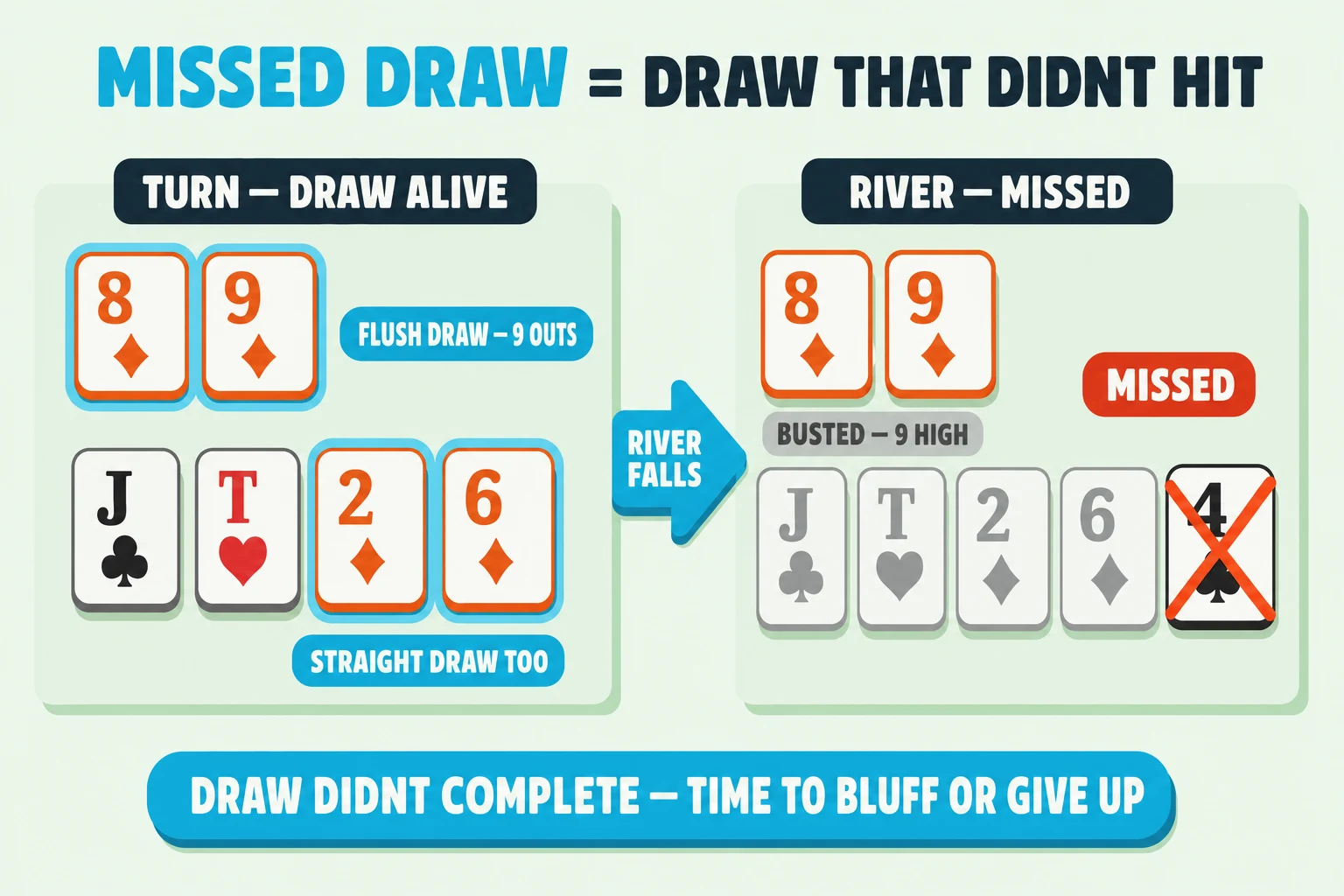
Which missed draws make better bluff candidates
Not all missed draws bluff equally.
- Missed flush draws generally make poor bluff candidates. Your suited hole cards act as blockers - cards in your hand that reduce opponent combinations - often lowering fold equity.
- Missed straight draws usually make better bluff candidates. They block fewer opponent folding combinations and can make completing the straight more believable.
Always weigh how your specific missed draw interacts with your opponent’s likely calling range. If the opponent likely has a made hand you can credibly represent, bluff viability increases.
How to decide whether to bluff a missed draw
Use a short, repeatable framework before firing a river bluff:
- Evaluate the opponent’s range and tendencies. Do they chase draws or call down light? Are they sticky players who rarely fold?
- Check board texture and story coherence. Does the betting line and board cards let you credibly represent a made hand?
- Apply blocker and perceived-range awareness. Do your hole cards block hands you want them to fold, or do they make your story unlikely?
Example: You hold 8♦9♦ on J-10-2-6 and miss a diamond on the river. If your line (check-call on the flop, bet the turn) plausibly represents a straight or two pair, a bluff may work. If your hand specifically blocks the opponent’s made diamonds, bluffing becomes weaker.
Adjustments against different opponent types
- Opponents with many missed draws: Increase bluff frequency and be willing to call down more. They fold less to thin bluffs and bluff themselves more.
- Opponents who rarely bluff missed draws: Tighten your river calling standards and reduce bluff frequency. These players more often show up with made hands.
- Consider your own perceived line: If your actions often include missed draws, opponents will call your river bluffs more frequently. Vary your approach accordingly.
Practical river lines and caution points
- With little to no showdown value, the river is a primary spot to consider a bluff - avoid when the missed draw is a poor blocker, like a missed flush.
- Prefer bluffs when the story fits the board and opponent tendencies make folding likely.
- Never bluff automatically. Each river decision should weigh blockers, perceived range, and opponent reads.
Quick checklist
- Confirm whether your missed draw blocks or enhances your opponent’s folding range.
- Assess opponent tendencies before bluffing: many missed draws versus unlikely bluffs.
- Verify the board texture supports the hand you intend to represent.
- Use perceived-range thinking: would your line credibly produce the hand you’re representing?
- Prefer missed-straight bluffs over missed-flush bluffs unless opponent-specific factors justify otherwise.