


Opener Profile
The opener is the first player to bet or raise in a betting round, initiating action. That opening move sets the hand's dynamics, gives opponents information, and forces responses. Opening behavior reveals intent: a large, confident raise shows strength, while a small tentative bet looks like protection or a probe. Strong opener hands - for example, three jacks - let you apply pressure and extract value. With moderately strong holdings you can still shape the hand by building the pot, protecting, or controlling it.
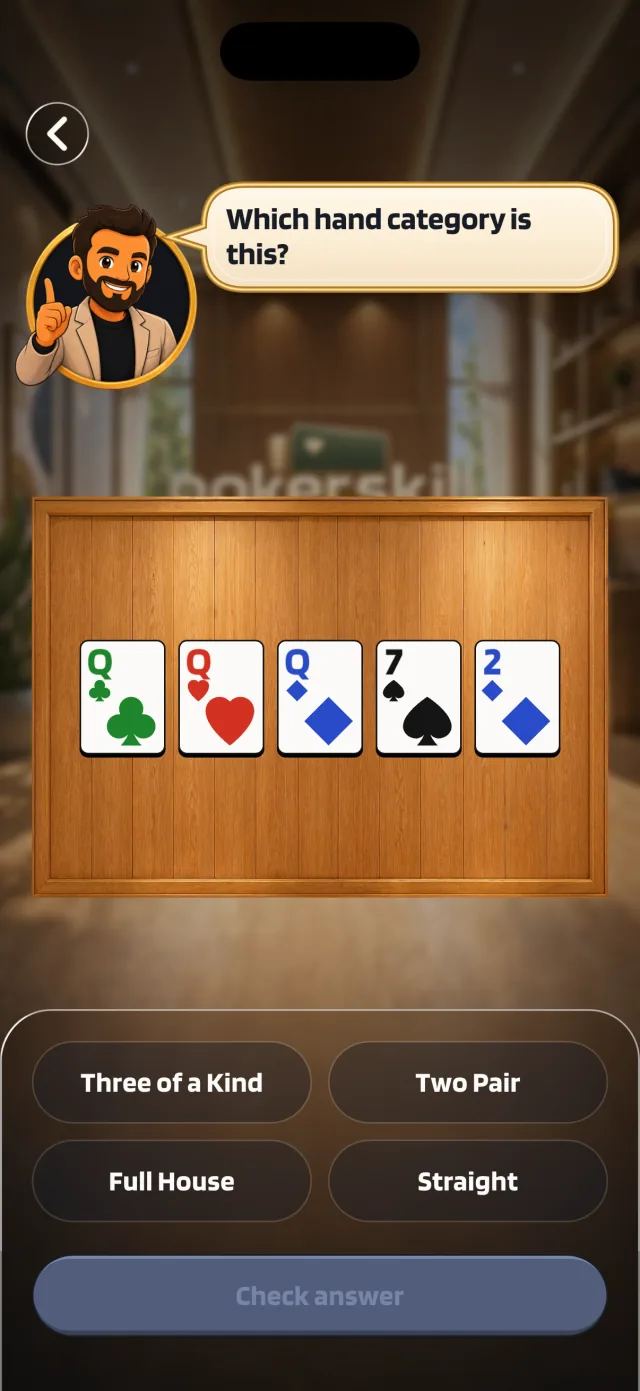
Practice this in Poker Skill. The Capstone: Preflop Plan lesson tests how you open, seat by seat: tight under the gun, wider from the cutoff and button, and no limping first in.
Get the free appOpener Profile - No-Limit Texas Hold’em
What an Opener Is and Why It Matters
The opener is the first player to bet or raise in a betting round, initiating action. That opening move sets the hand’s dynamics, gives opponents information, and forces responses. Opening behavior reveals intent: a large, confident raise shows strength, while a small tentative bet looks like protection or a probe. Strong opener hands - for example, three jacks - let you apply pressure and extract value. With moderately strong holdings you can still shape the hand by building the pot, protecting, or controlling it.
Short jargon notes: a value bet tries to get called by worse hands; a bluff aims to make better hands fold; thin the field means reducing the number of opponents.
Preflop and Flop Strategic Considerations for Openers
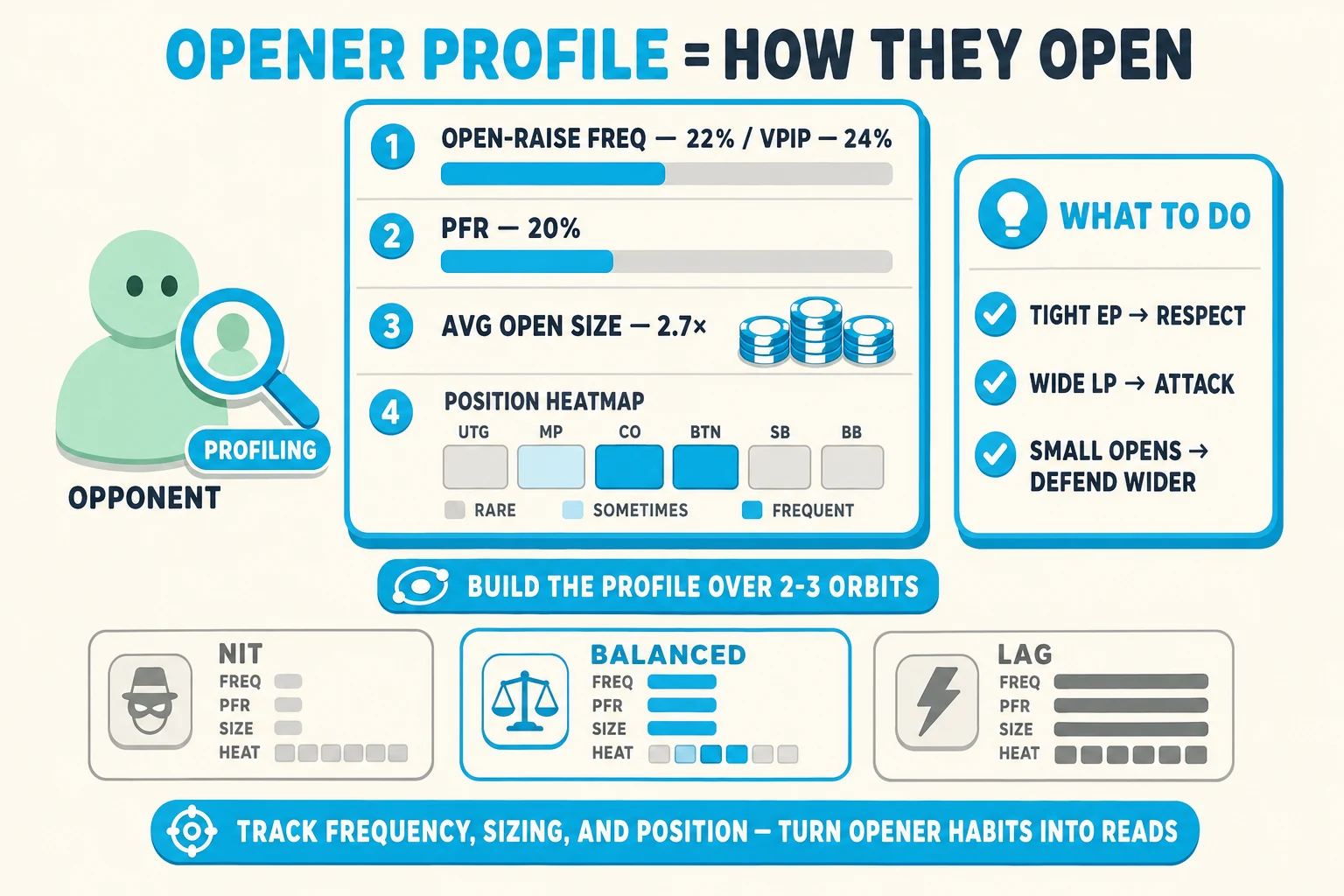
When you open, balance three core factors: hand strength, position, and opponent tendencies.
- Evaluate hand strength against position. Raise premium hands to thin the field and build equity. Open tighter from early position; widen your range from late position.
- Decide your goal: build the pot, protect against draws, or keep the pot small. Use bet sizing to match that objective.
- Observe opponents. If they fold often, mix in selective bluffs. If they call lightly, prioritize value betting.
Example: From the cutoff with JJ, raise preflop to narrow the field. On a low, dry flop, continuation-bet for value and to deny free equity. On a coordinated flop with obvious draws, size up to charge those draws or use a smaller bet to control the pot.
Position and Table Dynamics: Adjusting Your Opening Range
Position - where you act relative to others - matters more than raw hand strength.
- Early position: use a tighter opener range because more players act after you, increasing the chance of stronger holdings or re-raises.
- Late position: widen your opener range since you see earlier actions and can exploit weak players or steal blinds.
Your opening frequency and bet sizing shape later players’ reactions. Frequent small opens invite callers and re-raises; occasional larger opens create more fold equity.
Betting Patterns: Value, Protection, and Pot Control as the Opener
Match your betting pattern to your hand and the board.
- Value: Bet larger when worse hands will call. Example: you open with AK and hit top pair on the flop - extract calls from weaker pairs.
- Protection: Charge obvious draws with larger bets to discourage free cards and preserve fold equity.
- Pot control: With vulnerable hands, keep pots smaller by checking or using smaller bets to extract some value while limiting risk.
Avoid reckless escalation when likely to be outdrawn; targeted betting and selective aggression win more often.
Psychological Tactics and Table Image for Openers
Your table image - how others perceive you - changes how they respond to your opens.
- Be consistent. Frequent openers who bluff occasionally earn different respect than tight players who rarely bluff.
- Use timing and sizing to send messages. A quick small open looks routine; a sudden large open looks strong.
- Adapt. Watch reactions to your opens and change frequency, sizing, or hand selection to exploit predictable tendencies.
Quick checklist
- Confirm hand strength versus position before opening.
- Choose sizing that fits the goal: thin, protect, or control the pot.
- Open wider in late position; tighten in early position.
- Note opponent tendencies and exploit predictable fold or call behavior.
- Use image and timing to make bluffs and value bets more effective.
- Review opener outcomes and refine sizing and frequency over time.