


Orphaned Pot
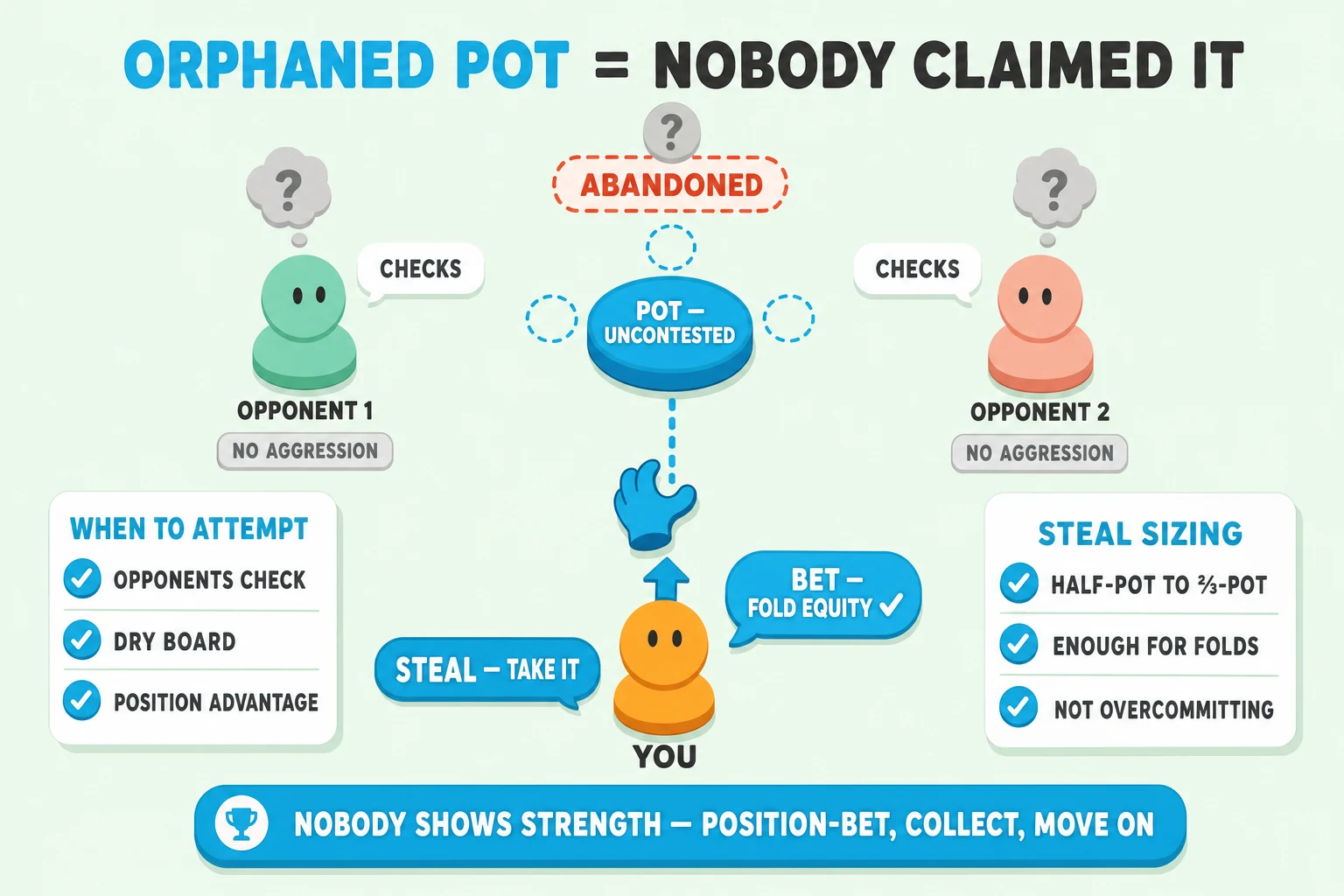
An orphaned pot occurs when betting forces all opponents to fold and leaves the pot uncontested. It isn't a special rule term - it describes a betting outcome. In practice it means no one will commit more chips; a single player takes control and wins without showdown.

Practice this in Poker Skill. The Missed Flop: Bet or Check? lesson shows when a bet takes the pot: heads-up on a dry flop a small c-bet takes it often, while on a wet, connected flop you check.
Get the free appOrphaned Pot in No-Limit Texas Hold’em
What an orphaned pot is
An orphaned pot occurs when betting forces all opponents to fold and leaves the pot uncontested. It isn’t a special rule term - it describes a betting outcome. In practice it means no one will commit more chips; a single player takes control and wins without showdown.
Example: you raise preflop, the button calls, and a dry flop appears. You make a continuation bet (c-bet - preflop raiser’s flop bet) that makes both opponents fold.
Why no-limit rules make orphaned pots common
No-limit lets players bet any amount up to their stacks, creating powerful fold pressure. Big bets or all-ins can price opponents out even with decent holdings or draws. Flexible sizing lets you tailor bets to boards and opponent tendencies. As aggression narrows the field, single players often win pots without a showdown.
Tactics that create orphaned pots
Common tactics used to orphan a pot:
- Continuation bets (c-bets) If you raised preflop and see a K-high flop, a half-pot c-bet can force folds.
- Late-position pressure When you act last, you can apply pressure after checks or weak bets. A button bet on the river will often steal pots from cautious blinds.
- Well-timed bluffs and sizing for fold equity Fold equity is the chance an opponent folds to your bet. Choose sizes that maximize fold equity without overcommitting chips.
- Overbets and shove lines A large overbet or shove can end the hand immediately if opponents refuse to risk stacks.
Practical sequence: raise preflop, c-bet the flop when checked to, and win if both opponents fold.
When to attempt to orphan a pot
Good times to attempt an orphan:
- Opponents show weakness: repeated checks, tiny bets, or missed draws.
- You have positional advantage: acting after opponents lets you see their actions and choose pressure points.
- Board texture makes common draws unlikely: a rainbow, disconnected runout reduces callers.
Example: on the button, both blinds check a ragged Q-4-2 board. A 60-75% pot bet will often orphan the pot by forcing folds.
Risks and how to manage them
Main risks:
- If opponents call instead of folding, your aggressive line can be exposed and require showdown strength.
- Poor sizing or timing can turn intended folds into calls, wasting chips.
How to manage:
- Be selective: choose spots where opponents display weakness and fold equity is clear.
- Size deliberately - bet enough to apply pressure but not so much that a call ruins your stack.
- Have a plan if called - know whether you can continue bluffing on later streets or must have showdown value.
Example contingency: you c-bet, face a flop call, and must decide on the turn. If the turn completes obvious draws, check and concede rather than barreling into a raised pot.
Quick checklist
- Look for opponents’ missed draws, weak betting patterns, and favorable board textures.
- Use position and deliberate bet sizing to construct reliable fold equity against opponents.
- Prefer orphan attempts when opponents are likely to fold rather than call.
- Always have a contingency plan detailing whether to continue bluffing or settle for showdown.