


Overfold
Overfolding means folding more often than strategically optimal across all streets. It occurs when you decline marginal calls or refuse to bluff-catch even when pot odds or hand equity justify staying in. The result: you surrender pots you could win or retain with a more balanced approach.
Practice this in Poker Skill. The Check-Call lesson drills the cure on the flop, treating a fold of a small pair to a small bet as too tight and saving the fold for hands with no pair and no draw.
Get the free appOverfold in No-Limit Texas Hold’em
What overfolding means
Overfolding means folding more often than strategically optimal across all streets. It occurs when you decline marginal calls or refuse to bluff-catch even when pot odds or hand equity justify staying in. The result: you surrender pots you could win or retain with a more balanced approach.
Example: You hold K♠Q♣ on the button, face a raise and a 3-bet, and fold quickly without weighing stack sizes or implied odds. Folding every marginal hand in spots like this is classic overfolding.
How overfolding shows up at the table
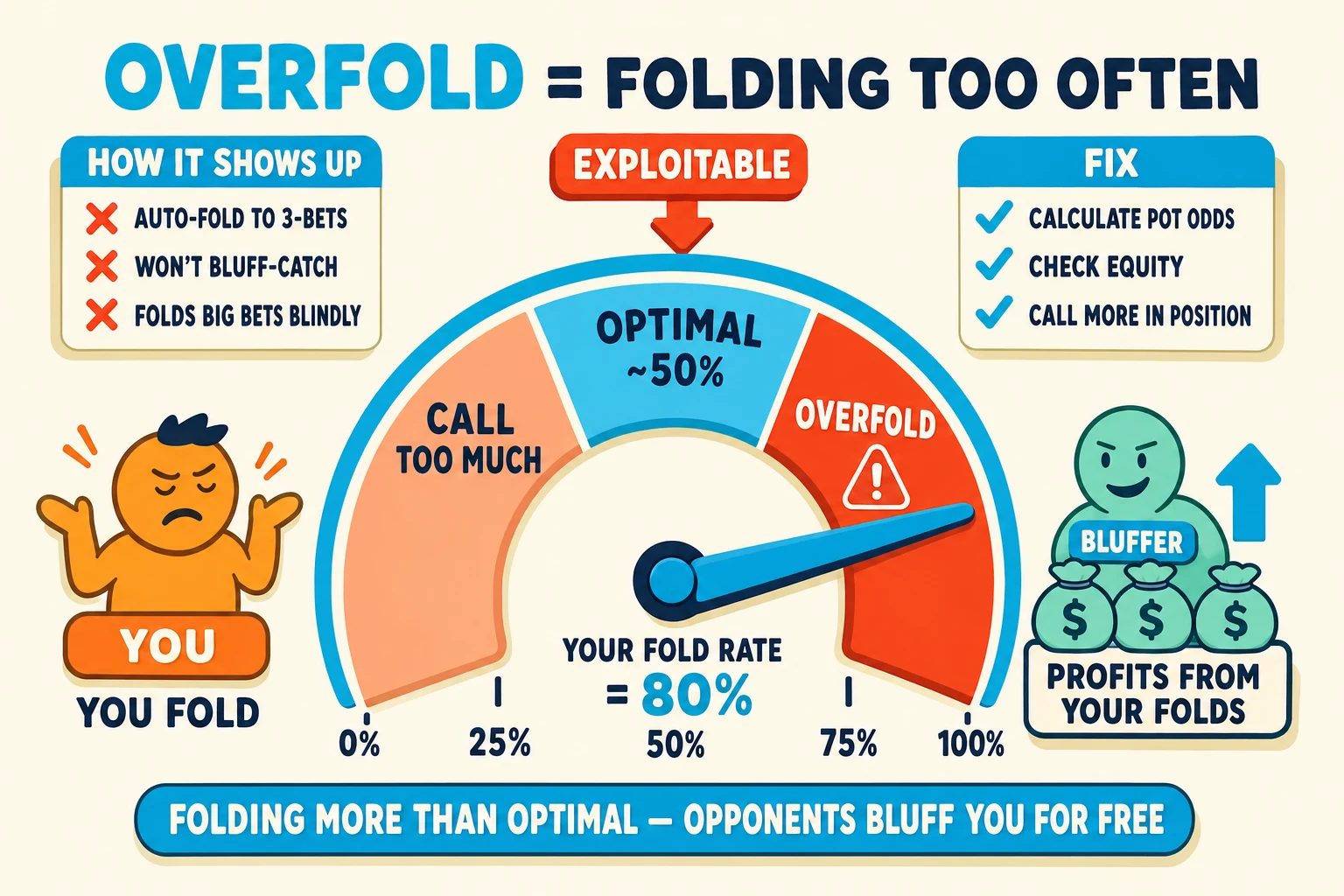
Overfolding produces clear, exploitable table patterns.
- Frequent folds to pressure: You fold too often to large bets or 3-bets; a 3-bet is a preflop re-raise. Out of position means you act before your opponent on later streets, which often increases folding, not always correctly.
- Rarely calling all-ins or marginal river bets: You automatically fold big bets instead of calculating pot odds and using your equity (your chance to win at showdown).
- Predictable passivity: Opponents notice your tendency to fold and bluff more because you’re an easy target.
Concrete example: On the flop you hold middle pair and an opponent jams (shoves all chips). If you fold every time without checking pot size versus your equity, opponents will exploit that by jamming light.
Why overfolding is costly and exploitable
Overfolding hands opponents three advantages:
- It fuels more bluffing - aggressive players bluff more when folds are expected.
- It costs long-term value - you forgo calls where pot odds or equity justify action.
- It creates imbalance - excessive tightness makes you predictable and easy to exploit.
Example: If you fold 90% of river bets, opponents can bluff rivers far more often than is profitable, collecting many small wins that add up.
Quantitative guidance: simple benchmarks
Numbers help you avoid extreme folding.
- All-in scenarios: Optimal call rates commonly fall in the 30-50% range, depending on stacks and position. Many hands with decent equity should be called, not folded automatically.
- Use pot odds and equity rather than fear of big bets; pot odds are the ratio of the call to the total pot you can win.
- Track call/fold frequencies and compare them to these benchmarks to spot excessive folding.
Quick calculation: If the pot is $100 and a bet is $25, your pot odds are 25/(100+25)=20%. If your hand’s equity exceeds 20%, a call is justified economically.
Practical fixes to reduce overfolding
Follow concrete steps to patch the leak:
- Calculate pot odds first, then estimate hand equity. Let math steer marginal calls, not intuition.
- Use position and hand reading to convert marginal spots; in position you can call more often because you act last.
- Adjust to bet sizing: recognize small bets as steals and call more; reevaluate very large bets but don’t auto-fold.
- Mix in defensive calls and occasional bluff-catches to avoid being an easy target; balance keeps opponents honest.
Example sequence: On the turn you have a backdoor straight draw and an opponent bets half pot. Check pot odds, estimate your equity (chance to complete), and call when the math and implied odds align.
Quick checklist
- Review recent hands for repeated folds in marginal spots and note any patterns.
- Before folding in future similar spots, quickly compare the required call to pot odds.
- Practice increasing call frequency in position and on clear pot-odds situations, guardedly and with purpose.