


Player Read
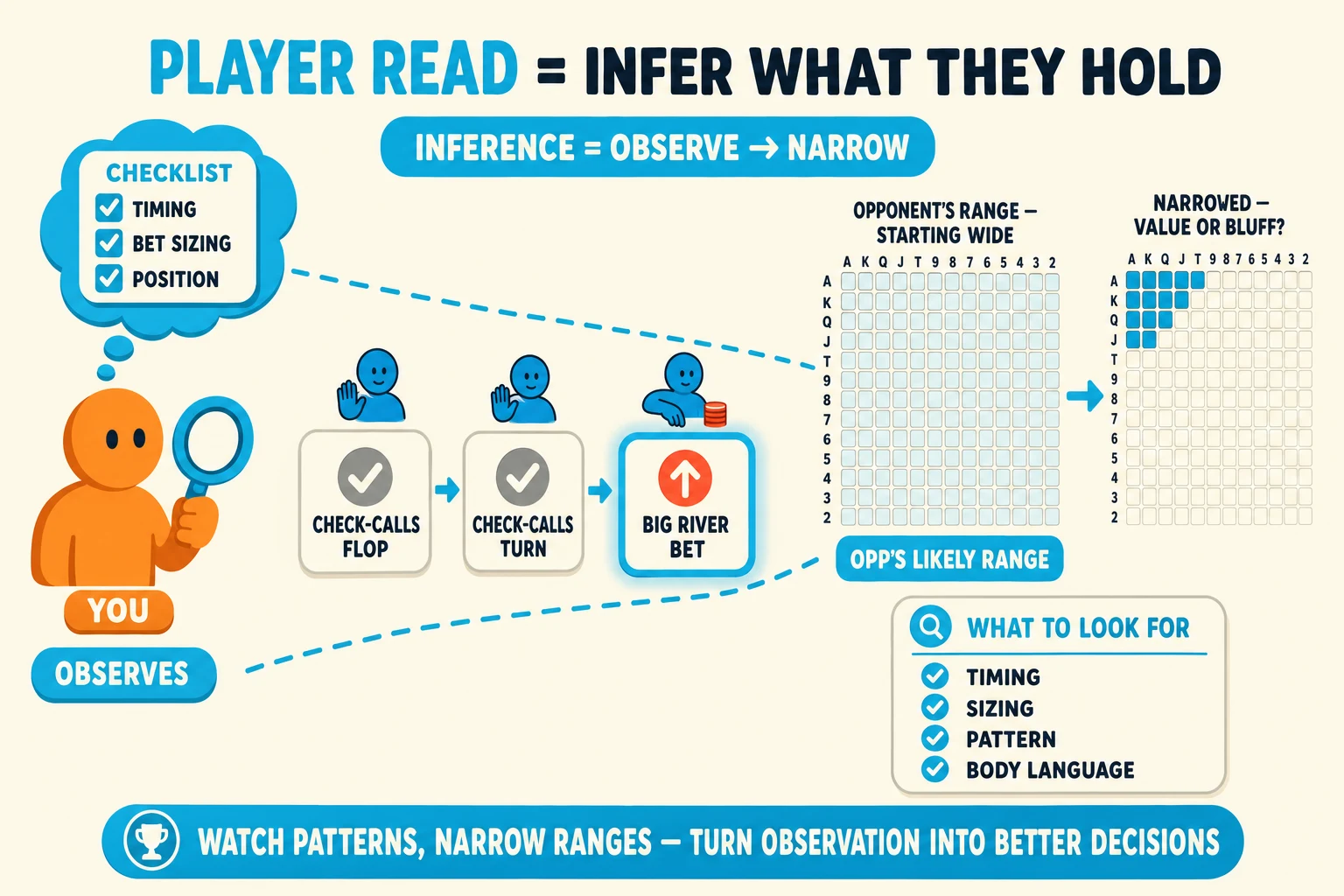
Player reads estimate what an opponent likely holds and what they'll do next. A read combines observable behavior, betting history, and table position to reduce uncertainty. That improves decisions - calling, folding, or raising becomes a calculation instead of a guess. For example: you face a river bet after an opponent check-called the flop and turn. If they have a passive pattern with occasional big river bluffs, you might call with a medium-strength hand. If they've been aggressive and only size up with strong holdings, folding may be correct. Reads convert repeated observations into reliable exploits.
Practice this in Poker Skill. The HJ vs UTG Caller lesson trains a betting-pattern read, treating a limp followed by a re-raise as a big hand, so even king-queen offsuit folds to it.
Get the free appPlayer Read
Why player reads matter
Player reads estimate what an opponent likely holds and what they’ll do next. A read combines observable behavior, betting history, and table position to reduce uncertainty. That improves decisions - calling, folding, or raising becomes a calculation instead of a guess. For example: you face a river bet after an opponent check-called the flop and turn. If they have a passive pattern with occasional big river bluffs, you might call with a medium-strength hand. If they’ve been aggressive and only size up with strong holdings, folding may be correct. Reads convert repeated observations into reliable exploits.
Live tells: reading physical and behavioral cues
A tell is any physical or behavioral cue that may reveal strength or weakness. Common live tells include posture, hands, gaze direction, and voice tone.
- Leaning back or straightening after betting often signals confidence; sudden shakiness while reaching for chips can signal strong emotion.
- Quick, jerky bets (instant bets) sometimes indicate weakness - the player wants chips in before thinking. Slow, deliberate bets can suggest thought and strength.
- Aggressive, loud talk or sudden silence may also reveal hand strength or bluffing.
Practice self-examination to stop leaking information: notice if you smile when bluffing or look away with a strong hand. Controlling your own tells prevents opponents from reading you. Single gestures remain unreliable; skilled players can manufacture false tells. Look for patterns over multiple hands before acting.
A simple three-step tell verification:
- Observe the behavior in at least three separate spots of play.
- Check whether the behavior correlates with strong or weak showdown hands.
- Exploit cautiously only when the correlation is consistent.
Betting patterns: building a player profile
Betting patterns create a behavioral and statistical profile. Track how many hands someone plays (tight vs loose) and how often they bet or raise versus call (aggression). Note bluff frequency and emotional swings (tilt - playing worse after losses).
Example profiling points:
- A tight, passive player who suddenly leads out large on the river is often showing strength.
- A loose, aggressive player who overbets on later streets might bluff frequently and can be floated cheaply (called with intention to act later) to induce mistakes.
Keep a simple notebook or mental tags: “TAG” (tight-aggressive), “LP” (loose-passive). Use the profile to adjust: value-bet thinly against calling stations and bluff more against players who fold too often.
Position: using table position to improve reads
Position is where you sit relative to the dealer - acting earlier or later in the betting round. Acting later gives more information because opponents act before you, revealing part of their range. For example: on the button (late position), three players check to you on the flop. That revealed passivity makes small continuation bets effective, and you can widen your bluffing range after observing hesitation. Use late position to confirm suspected tendencies before committing chips. When out of position, tighten up and avoid large bluffs unless you have strong read confirmation.
Online reads: timing, bet patterns, and their limits
Online play removes physical tells. Instead, rely on bet sizing, timing tells (instant clicks versus long pauses), and action patterns. Instant check-raises or very quick overbets can hint at routine or weak spots, but they remain noisy signals. Interface cues (pre-select buttons, rapid clicks) can offer hints but are unreliable - they might reflect convenience, lag, or multi-tabling. Treat online tells as lower-confidence evidence and look for pattern consistency across several hands.
Quick checklist
- Observe and record patterns across multiple hands before acting on a read.
- Regularly check and control your own physical and behavioral tells.
- Prioritize position when planning reads-based plays.
- Use timing and bet-size data online, but avoid over-interpreting single actions.
- Always verify suspected tells with additional evidence; adapt when opponents try to deceive.