


Randomization
Randomization means deliberately adding chance to decisions so opponents cannot predict you. In poker, it usually means mixing among viable plays to avoid patterns. For example, sometimes bluff and sometimes value bet so your long-run frequencies match a strategy. Common spots to mix include bluffing and value betting. Bluffing means betting weak hands to make better hands fold; value betting aims to get called with strong hands. If you always bluff in a river spot opponents will call every time. If you never bluff opponents will fold too often. Proper mixing keeps your range-the set of hands you might hold-ambiguous and harder to exploit.
Randomization in No-Limit Texas Hold’em
What randomization is and why it matters
Randomization means deliberately adding chance to decisions so opponents cannot predict you. In poker, it usually means mixing among viable plays to avoid patterns. For example, sometimes bluff and sometimes value bet so your long-run frequencies match a strategy. Common spots to mix include bluffing and value betting. Bluffing means betting weak hands to make better hands fold; value betting aims to get called with strong hands. If you always bluff in a river spot opponents will call every time. If you never bluff opponents will fold too often. Proper mixing keeps your range-the set of hands you might hold-ambiguous and harder to exploit.
When to use randomization at the table
Randomize marginal decisions or spots where opponents can adapt to patterns. For example, mix on turns where both a medium-sized bluff and a check-back are reasonable. Mix bet sizes on rivers when middle-strength hands justify either option. Don’t randomize clear folds or obvious value bets. Play most hands straightforwardly; randomize only when opponents could exploit a deterministic pattern. Shift from balanced mixing to exploitative play when you have reliable reads or sample data. Reduce bluffs against players who call too often; increase bluffs against players who fold too much. Let strong reads override baseline mixing frequencies.
Poker Skill’s Value Betting lesson stays on the straightforward side of this line, where top pair with the best kicker simply bets for value, the kind of obvious value bet this section says not to randomize.
How to implement practical randomizers
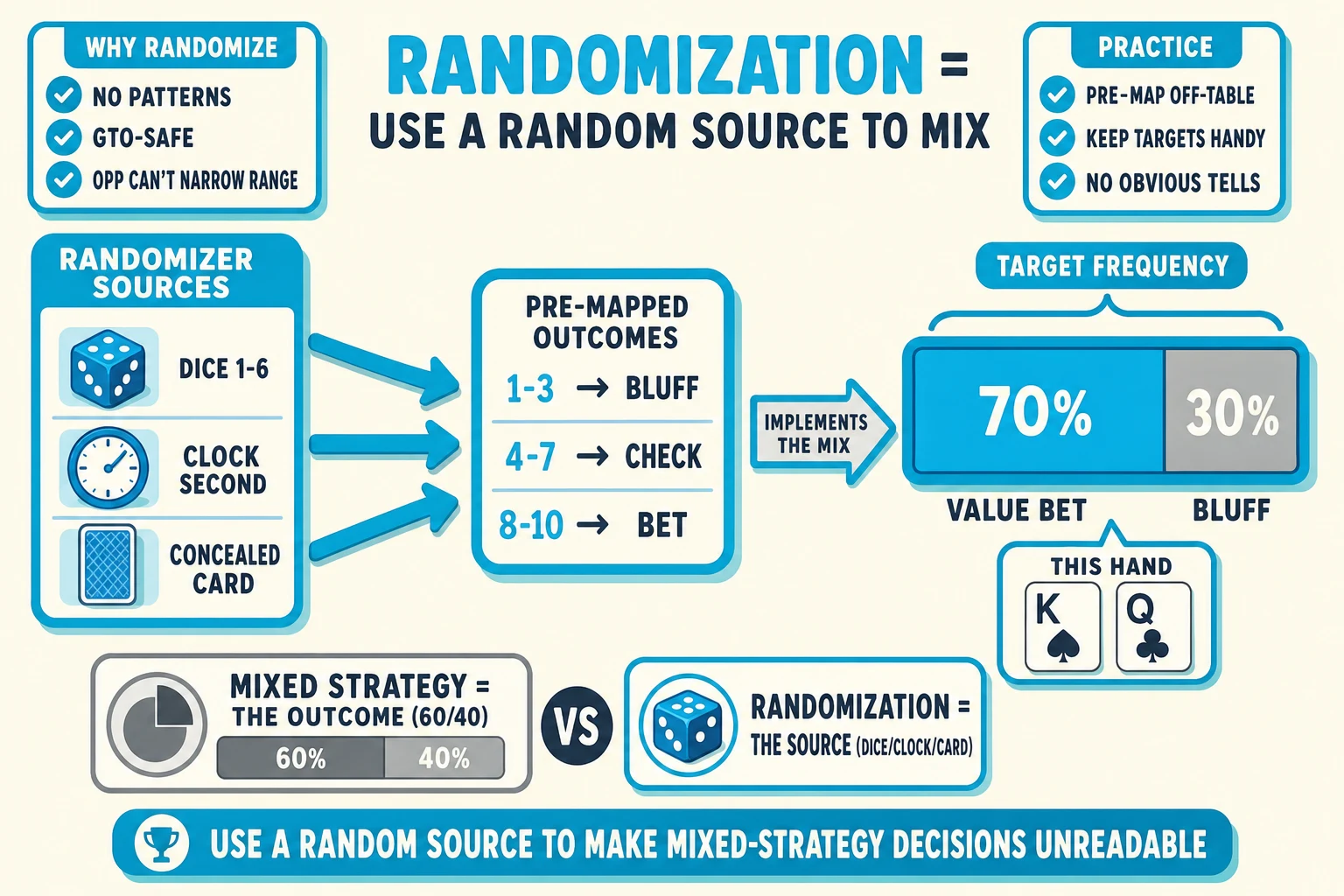
Use a simple, repeatable method so your in-game frequencies match targets.
- Decide target frequencies and actions to mix, e.g., 30% bluff, 70% value.
- Pre-map random outcomes to actions so you avoid on-the-spot hesitation. 1-60 = big bet 61-90 = small bet 91-100 = check
- Use a physical or digital tool to generate the random outcome and follow it.
Tools: watch second hand (even/odd seconds), draw a concealed card (red/black or rank ranges), or an online random number generator. Let the randomizer dictate mixed-spot plays so your long-run frequencies approach targets.
Examples of frequency-based mixes
- Bluff 30% and value bet 70% in a river spot. Over ten occurrences expect about three bluffs and seven value bets.
- With medium-strength hands split bet sizes: big bet 60% and small bet 40% to disguise strength.
- Mix checks into your range: assign a 10% check frequency with certain semi-bluffs so opponents can’t treat every check as weakness.
Practice these ratios off-table with a randomizer until they feel intuitive. Use the randomizer as a backup; recognize the situation and know your targets without long pauses.
Live vs online considerations and etiquette
Live: use subtle cues like glancing at a watch’s second hand or drawing a concealed card. Avoid obvious routines that reveal information or slow the game. Online: use unobtrusive software randomizers, an even/odd clock rule, or mental rules tied to chat timestamps. Confirm any software complies with site rules.
Always confirm your method doesn’t violate house rules or attract attention. Aim for privacy and efficiency, not distraction.
Quick checklist
- Pick 2-4 recurring spots where mixing matters (marginal decisions, bluffs, bet sizes).
- Choose a reliable randomizer and pre-map outcomes to specific actions.
- Set target frequencies (e.g., 30/70) and practice until decisions feel natural.
- Adjust mixes when you have strong opponent reads or exploitable tendencies.
- Review session data to confirm long-run frequencies match your intended mixes.