


River Class
The river is the fifth and final community card dealt face-up in No-Limit Texas Hold'em. After it appears, the final betting round happens and hands often go to showdown, where remaining players reveal cards to determine the winner. No more cards will arrive, so the river is the last real chance for hands to improve. River bets frequently decide the pot and the hand's outcome.
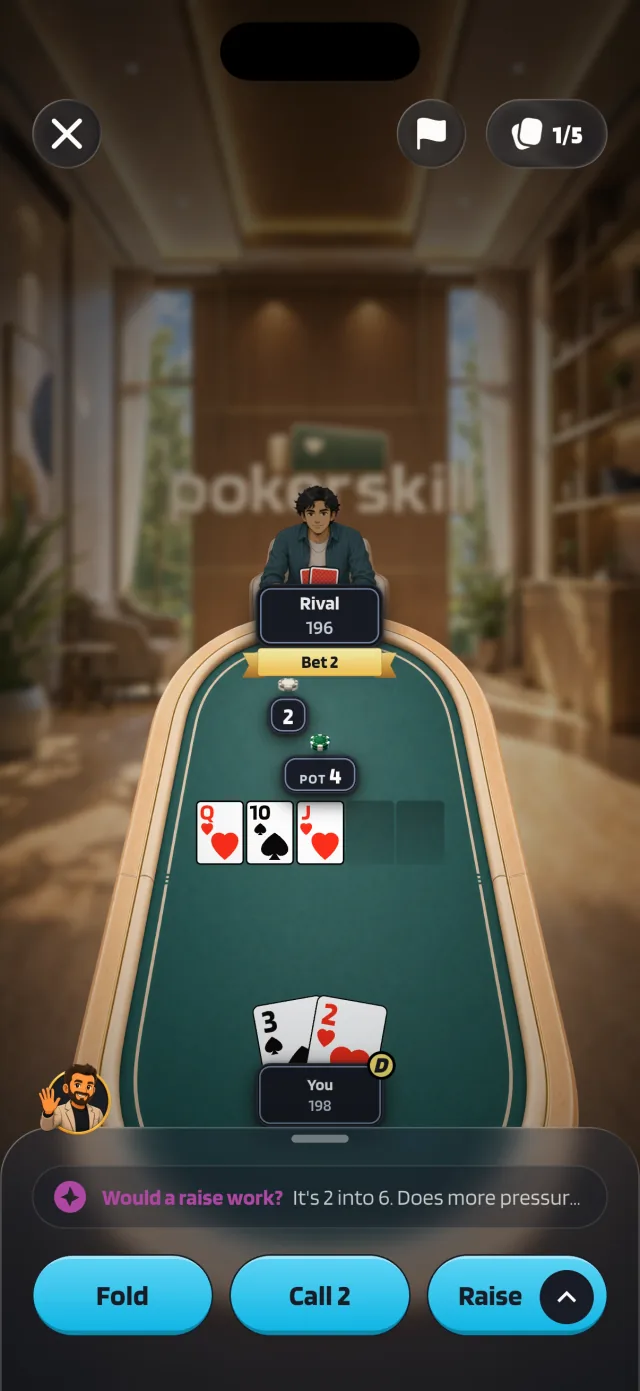
Practice this in Poker Skill. Before a river bet in Practice vs AI, where you play full hands against AI opponents, Coach Max can ask how the bet wins now that no cards are left to come: at showdown, or when the other player folds.
Get the free appRiver Class
What the River Is
The river is the fifth and final community card dealt face-up in No-Limit Texas Hold’em. After it appears, the final betting round happens and hands often go to showdown, where remaining players reveal cards to determine the winner. No more cards will arrive, so the river is the last real chance for hands to improve. River bets frequently decide the pot and the hand’s outcome.
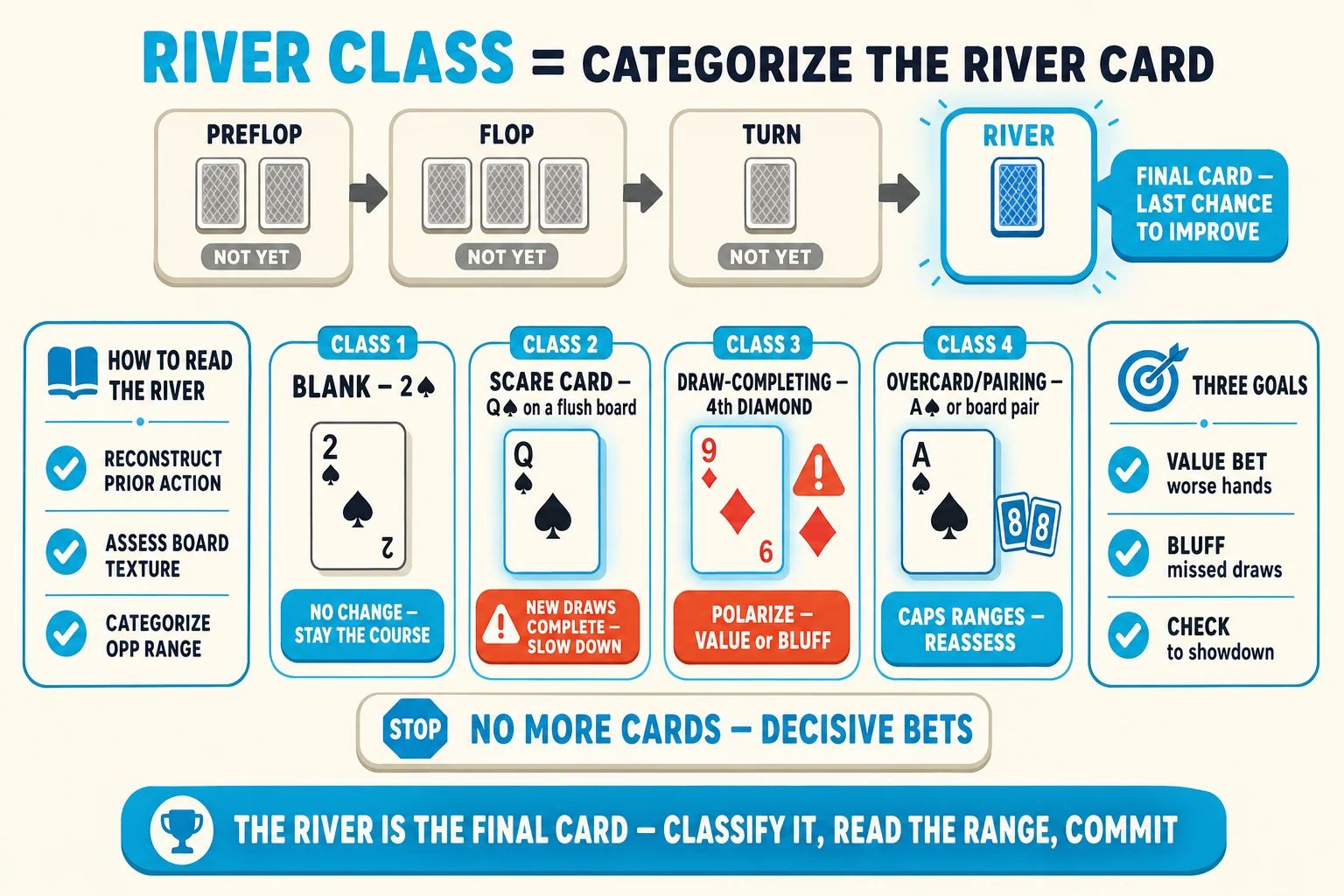
Reading the River: Hand Strength and Ranges
A range is the set of hands an opponent could reasonably hold given earlier action. On the river, ranges often polarize into strong value hands or pure bluffs. Use flop and turn action plus board development to narrow those ranges.
Steps to read the river:
- Reconstruct prior action and note who showed aggression earlier, since continuous pressure often signals value or a planned bluff.
- Assess board texture to see if the river completes likely draws, such as straights or flushes, or pairs the board.
- Assign rough categories by sorting hands into value hands, missed draws (bluffs), and weak showdown hands; prioritize accuracy because many hands are finalized on the river.
Example: If the board has three cards to a flush and the river is a blank, a turn bettor who checks on the river may hold a medium-strength made hand. A large river bet by that same player becomes polarizing - either very strong or a bluff.
River Betting: Value, Bluffs, and Bet Sizing
Value betting extracts chips from weaker hands that will call. Bluffing aims to make better hands fold and depends on fold equity, the chance opponents fold to your wager.
Choose your line based on your goal:
- Value betting: Bet amounts opponents will call with worse hands. Against players who call down light, prefer small-to-medium bets to maximize calls.
- Bluffing: Represent a credible completed draw or monster hand. Bluff when the river credibly improves the range you’re representing and your opponent can fold.
- Bet sizing: No-Limit allows any size up to all-in. Size your bet to match the objective - use large bets to apply pressure or smaller bets to induce thin calls.
Example sizing: Small bets induce calls from marginal hands; large bets or shoves apply maximum pressure and can fold out medium-strength hands. Always weigh pot odds, the price an opponent must call, when choosing your size.
Tournament River Considerations
Tournament play raises the stakes for river decisions and magnifies single mistakes. One wrong call can cost you tournament life or a substantial portion of your chips. Survival and payout structures increase the cost of errors and raise the value of well-timed aggression.
Adaptations:
- Factor stack sizes. With short stacks, shoves polarize and often fold out better hands; with deep stacks, mixed bet sizes are usually more profitable.
- Adjust to tournament stage. Late-stage mistakes are costlier, so be cautious with marginal bluffs when elimination risk is high.
Psychology and Opponent Exploits on the River
Use behavioral reads and remembered tendencies to shape your river strategy. Many players call too wide or fail to extract value, so adjust accordingly. If an opponent fears big bets, lean into larger value bets; if they call down light, widen your value range. Strong players design river bets to confuse opponents while extracting maximum value, so spot patterns like always folding to river shoves and exploit them.
Quick checklist
- Confirm whether your river goal is value extraction, bluff, or getting to a showdown without further risk.
- Reconstruct opponent ranges from prior action before committing chips on the river.
- Pick a bet size that aligns with your objective and the No-Limit leverage available.
- Remember there are no more cards - make the final decision decisively.