


Range Bet
A range bet is a small flop bet (often 25–33% pot) made with most or all of your range, used by the preflop raiser when the board favors their whole range.
Practice this in Poker Skill. The C-Bet Sizing lesson works through this small bet on dry flops, where middle pair on a dry queen-high board bets small while an underpair on a connected T-9-8 checks.
Get the free appRange Bet in Poker: Meaning, When to Do It, Examples
Range bet: quick definition
A range bet (often called a range c-bet) is a bet you make on the flop with most or all of your range, not just with a few specific hands.
Most often, this refers to the preflop raiser making a continuation bet in a single-raised pot.
In practice, it usually means:
- you have a board where you have a range advantage, and
- you use a small bet size to pressure the weakest parts of your opponent’s range.
A range bet is one specific shape of c-bet: the same continuation-bet machinery, applied to your whole range instead of a curated subset. The opposite move on the same flop is the range check.
For the wider flop framework, read when to c-bet the flop.
Why players range bet
Range betting is about two things:
- Winning the pot right now versus the hands that missed
- Making it hard to play against you (your bet doesn’t “give away” that you have a strong hand)
If you only bet when you have it, good players will fold everything else.
When to range bet (and when not to)
When range betting is common
Range bets show up most on static, dry boards without many strong draws.
These boards tend to:
- miss the caller’s range often
- keep your opponent’s continuing hands capped
The same idea, in board texture terms: prefer range bets on a static board and trade them for selective bets or checks on a dynamic board.
When range betting is usually a mistake
Avoid range betting on dynamic, wet boards where:
- the caller has lots of strong hands and draws
- your opponent can check-raise aggressively
- your small bet doesn’t accomplish much
Typical range bet sizing
Most “range bets” are small, commonly ~25–33% pot (and sometimes even smaller, depending on the spot).
Why small sizing works:
- it risks less with your weak hands
- it still pressures your opponent’s trash hands
- it keeps your range wide and hard to read
The 25–33% pot bet sits in the small end of the standard bet size family, which is exactly the sizing range bets live in.
Examples (YES board / NO board)
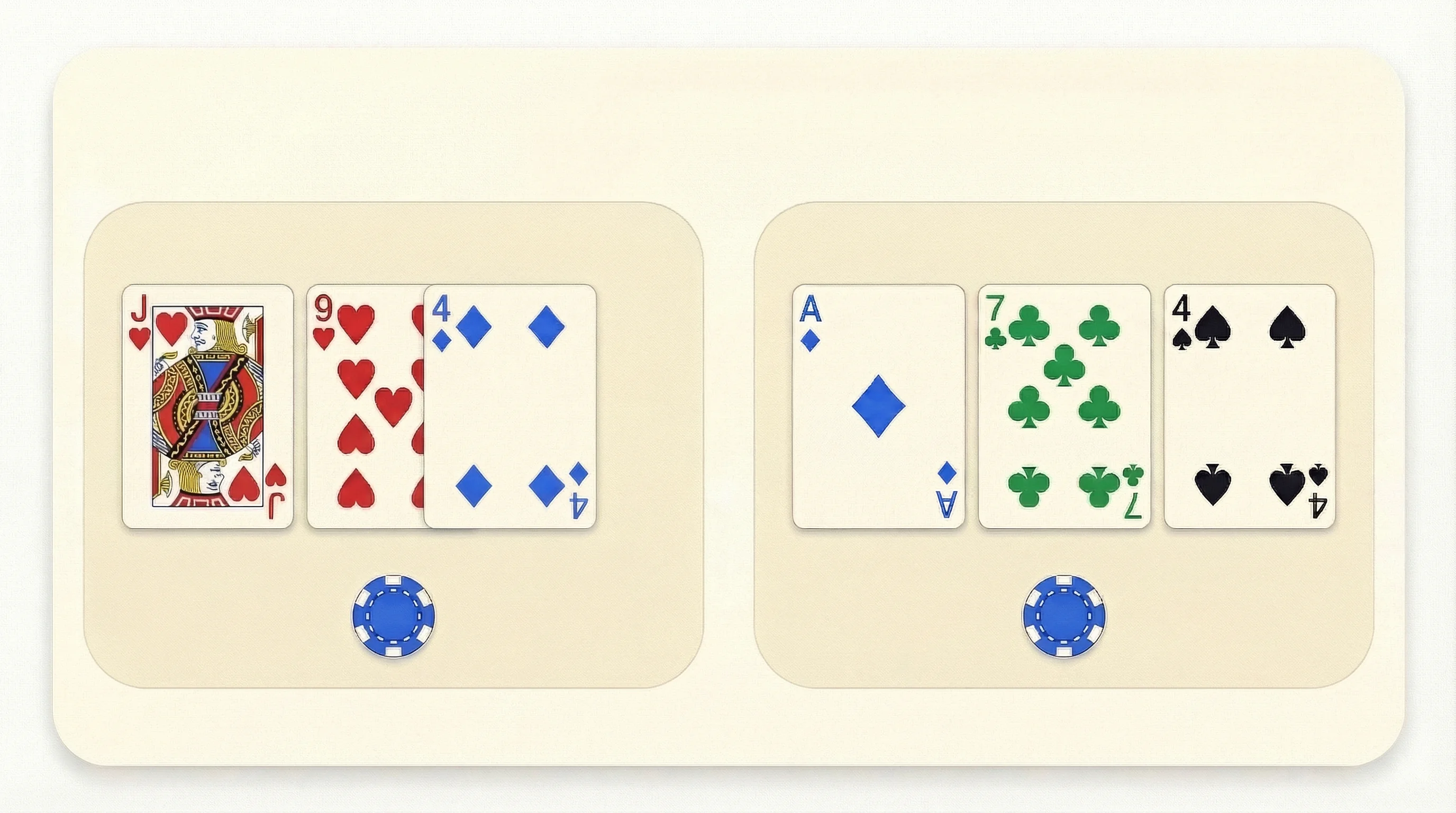
Example A: “YES” — dry/static flop
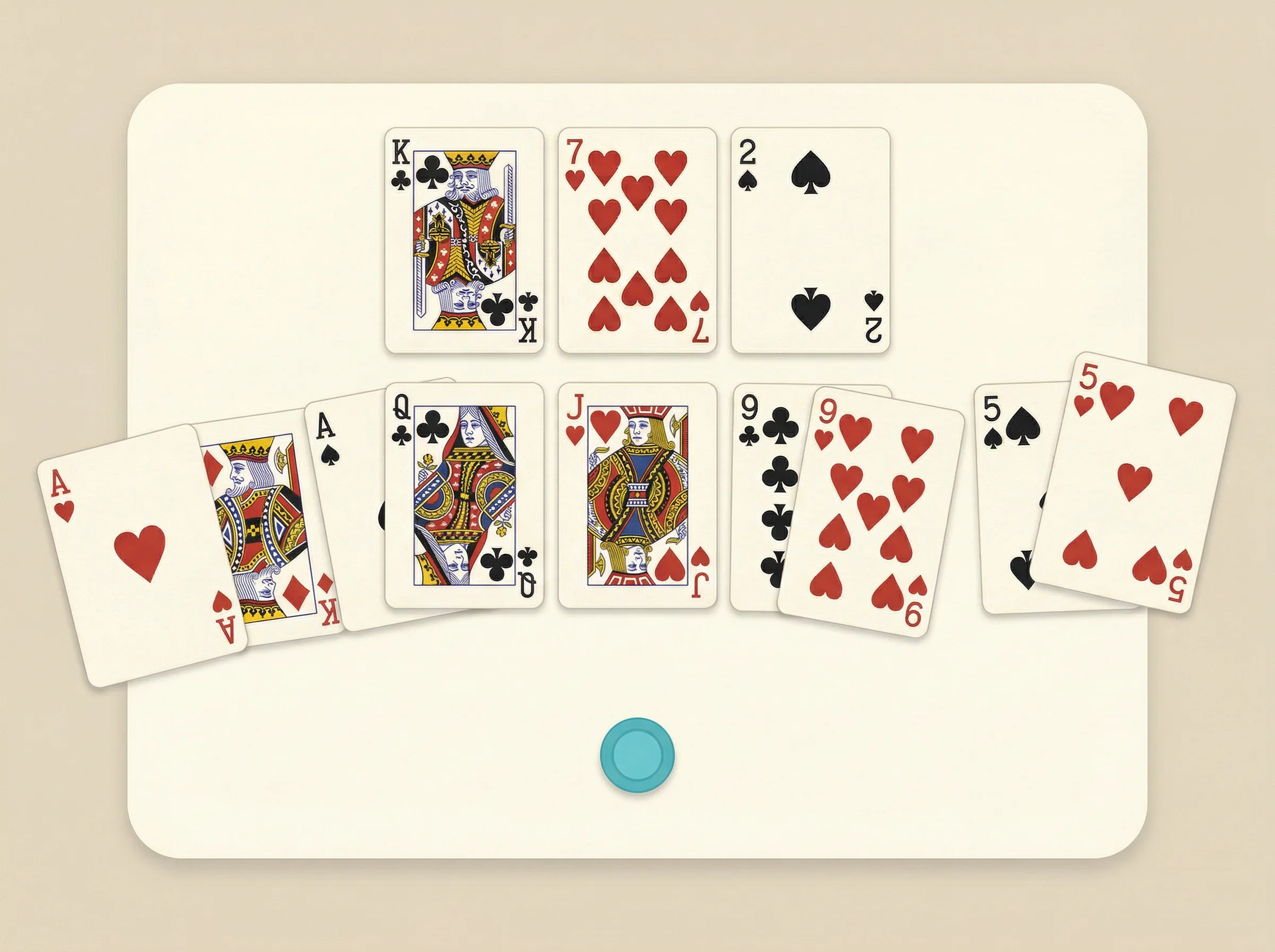
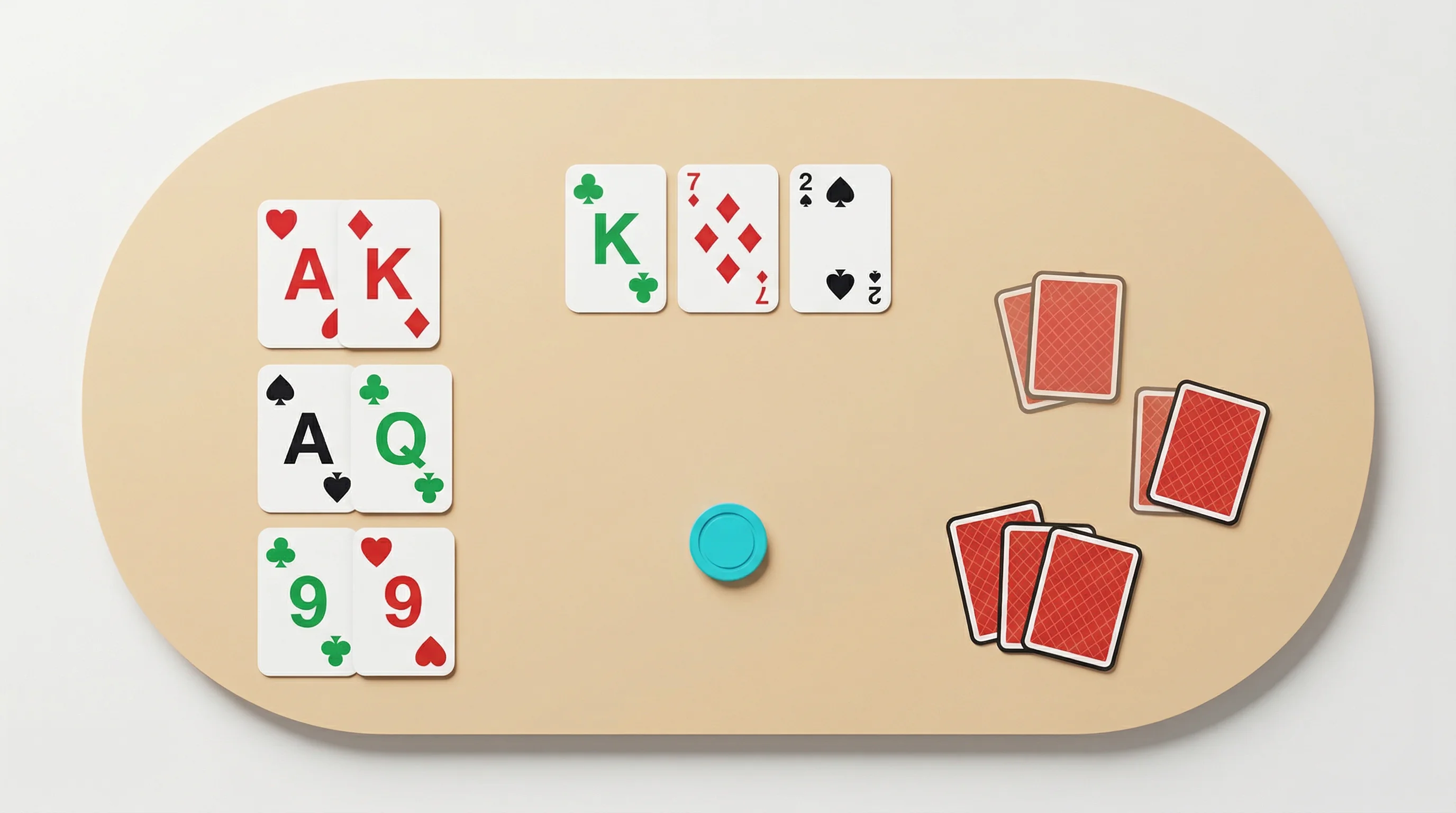
Flop: K♣ 7♦ 2♠ (rainbow)
This is a board where the preflop raiser often has a range advantage.
A small bet with most hands can work well because many hands in the caller’s range have missed.
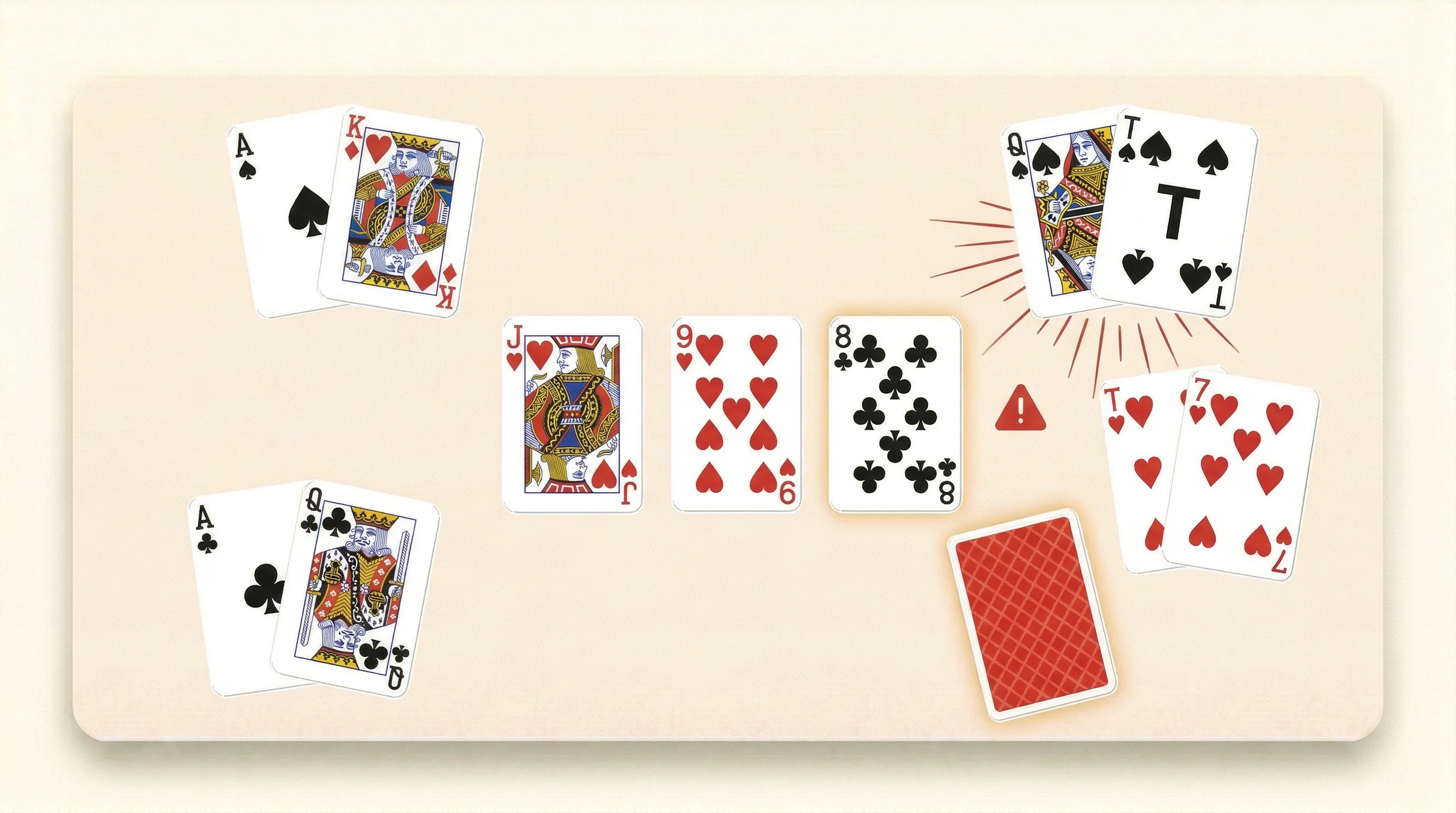
Example B: “NO” — wet/dynamic flop
Flop: J♥ 9♥ 8♣
This board has lots of:
- pairs + draws
- straight draws
- flush draws
If you range bet here, you can get check-raised a lot and forced into tough decisions.
Common mistakes
1) Range betting multiway
Multiway pots reduce fold equity. Someone connected more often.
2) Betting small on boards that demand polarization
On wet boards, a small bet can be the worst of both worlds:
- you don’t deny equity
- you don’t get folds
- you bloat a pot where you can be behind
3) Confusing “range bet” with “c-bet”
A range bet is a specific type of c-bet strategy.
FAQ
Is a range bet the same as a c-bet?
No. A c-bet can be wide or selective. A range bet is when you bet with most/all of your range.
What size is a range bet?
Usually small.
Should you range bet multiway?
Usually no — fold equity is lower.