


Break-Even Equity
Break-even equity = call / (current pot + call). The minimum win-rate a call needs to be 0 EV, with bet-size shortcuts and worked pot-odds spots.
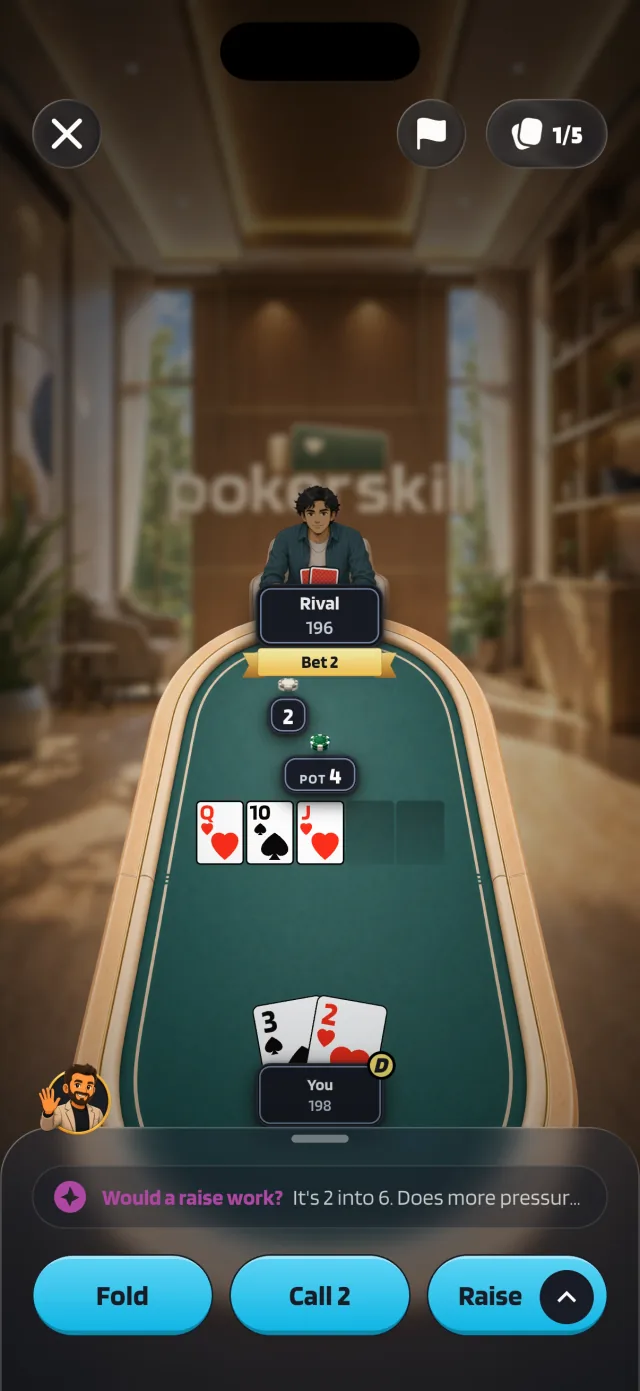
Practice this in Poker Skill. In Practice vs AI games, Coach Max, the AI poker coach, can turn the price into this number before a call: a bet twice the pot lays 3-to-2, so the call has to win about 2 times in 5.
Get the free appBreak-Even Equity in Poker: Formula + Pot-Odds Examples
Break-even equity is the minimum percentage of the time your hand needs to win for a call to be neither profitable nor unprofitable. In other words, it is the point where calling is exactly 0 EV.
The core formula is simple:
Break-even equity = call / (current pot + call)
If your actual equity is higher than that number, calling makes money in the long run. If your equity is lower, folding is better.
This is where pot odds become useful. Pot odds tell you what price you are getting. Break-even equity turns that price into the exact win percentage you need.
What is break-even equity?
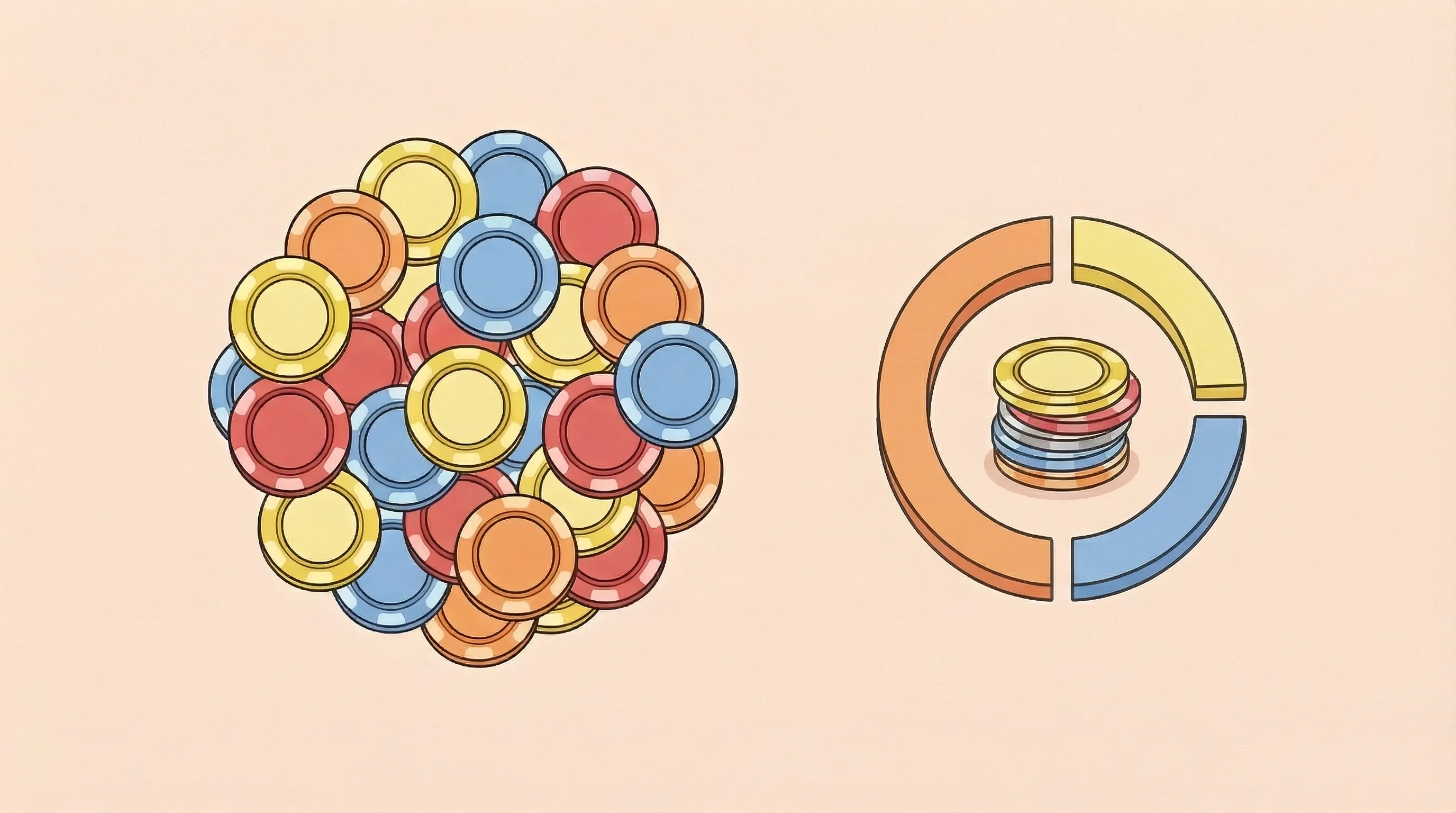
Break-even equity is the minimum share of the pot you need to win often enough to justify putting more chips in.
Say the current pot is $100 and it costs you $25 to call. Your break-even equity is:
25 / (100 + 25) = 20%
That means you need to win at least 20% of the time for the call to break even.
A good shortcut to remember is this:
- More favorable pot odds = lower break-even equity
- Worse pot odds = higher break-even equity
So when the pot is laying you a great price, you do not need much equity. When the price is bad, you need a hand that wins more often.
The break-even equity formula
Use this version at the table:
Break-even equity = call / (current pot + call)
Definitions:
- Call = the amount you must put in right now
- Current pot = the amount already in the middle before you call
- Current pot + call = the final pot size after you call
That last point matters. One of the most common mistakes is using the wrong denominator.
Worked formula example
The pot is $80. Your opponent bets $40. Action is on you.
- Current pot = $120
- Call = $40
- Final pot after your call = $160
Now do the math:
40 / 160 = 25%
You need 25% equity to call.
You can also think about the same spot through pot odds. If you call $40 to win a final pot of $160, you need one winning outcome out of every four total outcomes. That is the same 25% result.
Quick cheat sheet by bet size
If you memorize a few common bet sizes, break-even equity gets much easier in real time.
| Bet size you face | Break-even equity |
|---|---|
| 1/4-pot bet | 16.7% |
| 1/2-pot bet | 25.0% |
| 2/3-pot bet | 28.6% |
| 3/4-pot bet | 30.0% |
| Pot-size bet | 33.3% |
| 1.5x-pot overbet | 37.5% |
| 2x-pot overbet | 40.0% |
Those numbers come from the same formula every time. The only thing that changes is the size of the bet you are calling.
Worked examples
Example 1: Flush draw on the flop
You are on the flop with A♥ 7♥ on K♦ 9♥ 2♣.
The pot is $100. Your opponent moves all-in for $50, and if you call, no more betting remains.
- Current pot = $150
- Call = $50
- Break-even equity =
50 / (150 + 50) = 25%
You have a flush draw, which is usually 9 outs. If all the money goes in on the flop and you are guaranteed to see both remaining cards, 9 outs gives you about 35% to 36% equity by the river.
That is well above the 25% you need, so calling is profitable.
This is also where the Rule of 2 and 4 helps. On the flop, 9 outs × 4 gives you a quick estimate of about 36% equity. It is a shortcut, not exact math, but it is close enough for fast decisions.
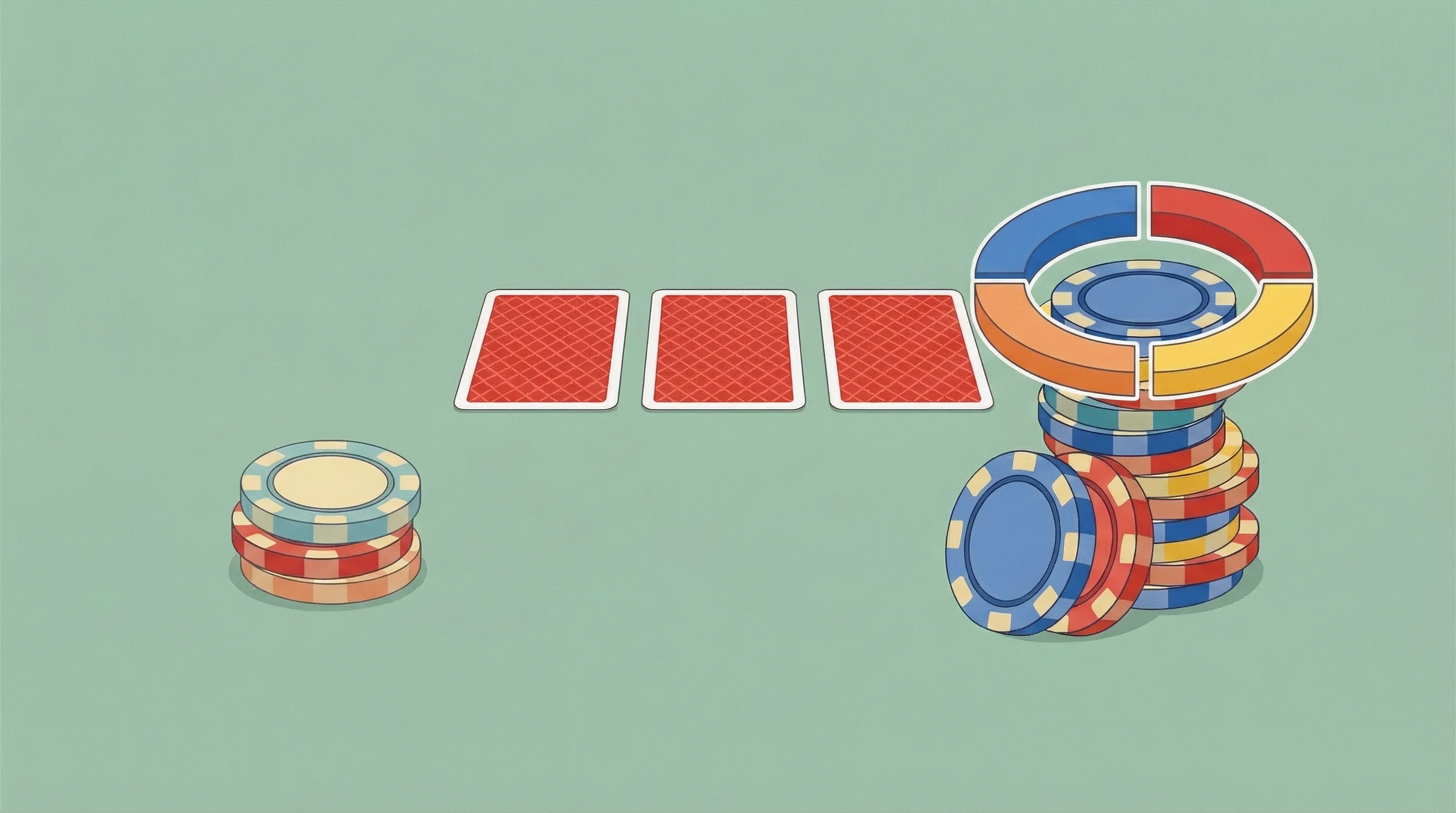
Important caveat: on a normal flop call, you are not always guaranteed to see both turn and river for free. If more betting can happen later, do not blindly use two-card equity. That is where implied odds and future action matter.
Example 2: Open-ended straight draw on the turn
You hold 8♣ 7♣ on Q♦ J♥ 2♠ 9♥, giving you an open-ended straight draw.
The pot is $120. Your opponent bets $60 on the turn.
- Current pot = $180
- Call = $60
- Break-even equity =
60 / (180 + 60) = 25%
An open-ended straight draw usually gives you 8 outs. With one card to come, 8 outs is about 17% equity.
That is below the 25% you need.
So if this is a pure turn call with no extra money to win later, folding is correct. If you think you can win more on the river when you hit, then implied odds may improve the call. But the direct pot-odds answer is still clear: 17% is not enough for a 25% price.
If you need the draw baseline itself, see Open-ended straight draw.
Example 3: Bluff-catcher on the river
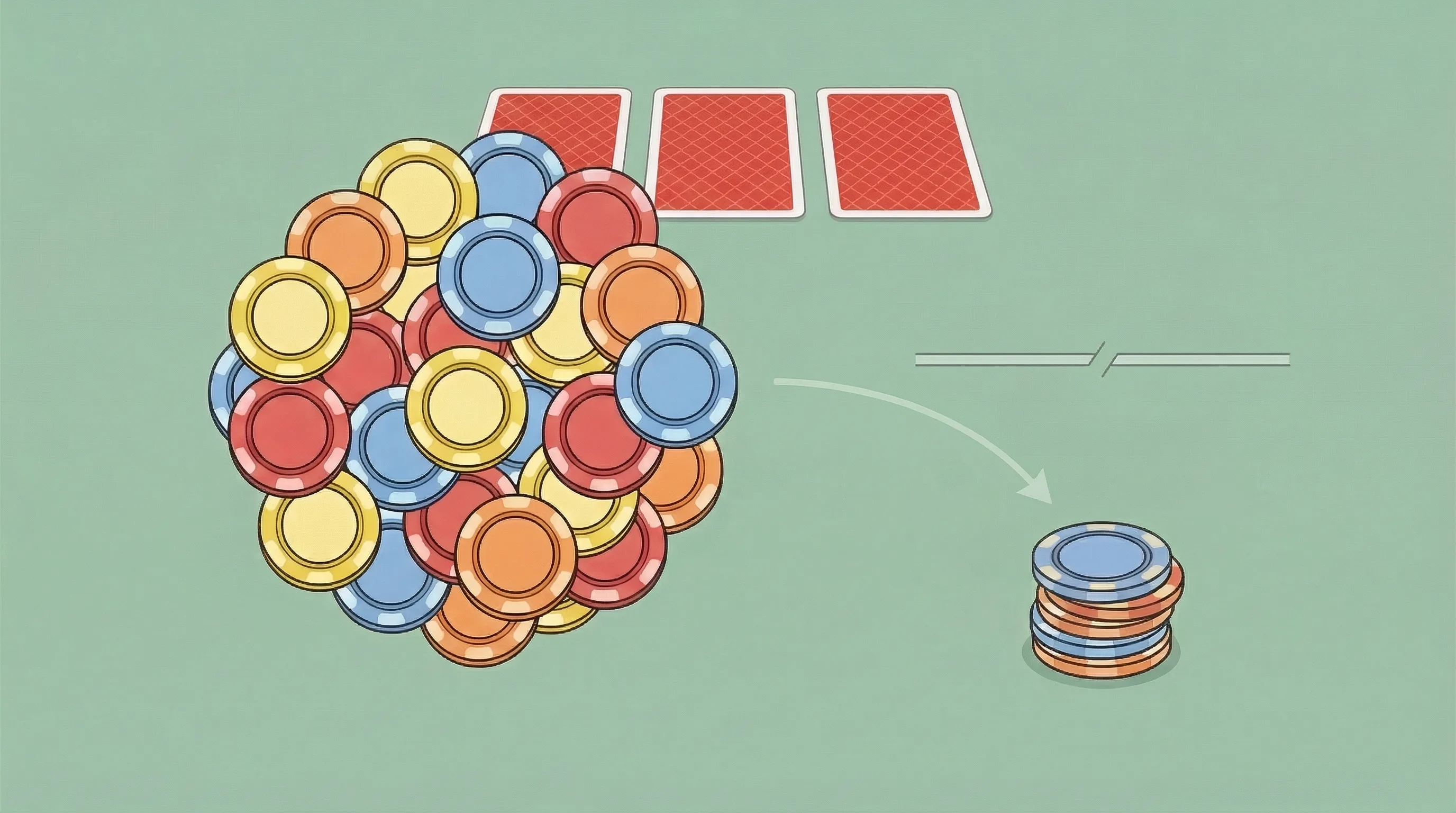
The river is where break-even equity becomes especially useful because there are no cards to come. Your equity comes from how often your hand is already best.
The pot is $100. Your opponent bets $50 on the river.
- Current pot = $150
- Call = $50
- Break-even equity =
50 / (150 + 50) = 25%
You hold one pair and can only beat bluffs and a few thin value bets.
Now the question becomes simple:
- If your hand wins at least 25% of the time, call
- If your hand wins less than 25% of the time, fold
In practice, that means your opponent needs to be bluffing often enough. If they are bluffing more than one out of every four times in this spot, your call starts to work. If they are almost always value betting, folding is better.
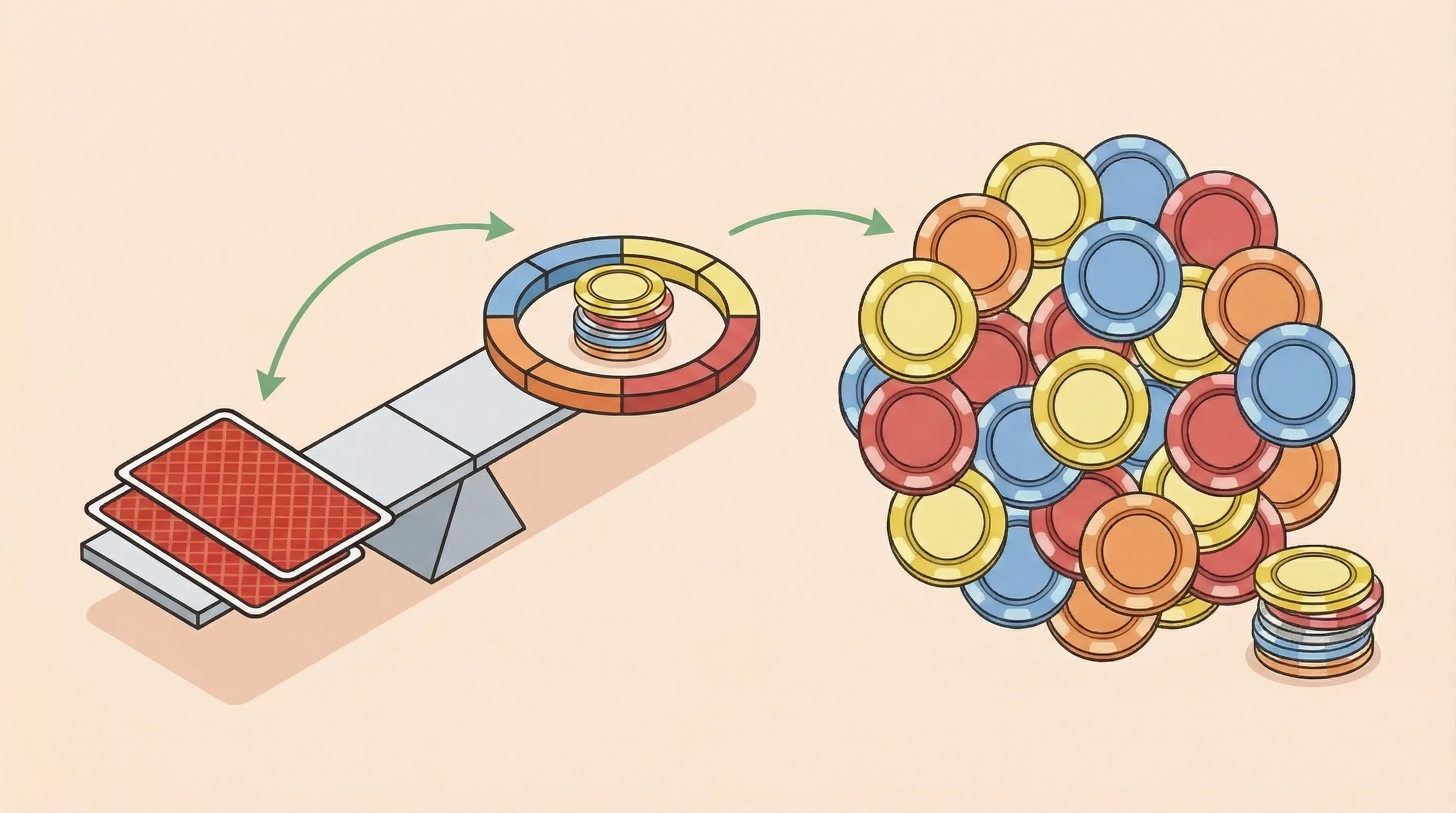
Pot odds vs break-even equity vs implied odds
These terms are related, but they are not the same thing.
Pot odds are the price you are getting right now.
Break-even equity is the winning percentage you need to justify that price.
Implied odds include future money you may win on later streets if you hit your hand.
That difference matters. A turn draw can be a fold by direct pot odds but a call once you factor in the extra chips you expect to win on the river.
A clean way to think about it is:
- Pot odds tell you the offer
- Break-even equity tells you the requirement
- Implied odds tell you whether future money changes the answer
Common mistakes
1) Using the wrong pot size
Make sure you know what your current pot means. It is the amount already out there before you call. Then add your call once in the denominator.
2) Mixing up pot odds and equity
Pot odds are the price. Equity is your chance to win. They are connected, but they are not interchangeable.
3) Treating the Rule of 2 and 4 like exact math
The Rule of 2 and 4 is a shortcut. It is useful, but it is still an estimate. It works best for quick in-game decisions, not exact calculations.
4) Forgetting about implied odds
A direct call may look bad on raw pot odds, but future money can change it. The opposite is also true: if your draw is weak or your outs are not clean, implied odds may be worse than you think.
5) Counting bad outs as clean outs
Not every out is a real out. If your flush draw can still lose to a higher flush, or your straight card pairs the board and makes your opponent a full house, your actual equity is lower than the basic shortcut suggests.
6) Forgetting what break-even means
Break-even does not mean “great call.” It just means neutral EV. If your call is only barely profitable, small mistakes in your read can flip it into a losing play.
FAQ
What is break-even equity in poker?
Break-even equity is the minimum percentage of the time your hand must win for a call to be 0 EV. If your hand wins more often than that, calling is profitable.
How do you calculate break-even equity from pot odds?
Use this formula:
Break-even equity = call / (current pot + call)
If the current pot is $120 and it costs you $40 to call, your break-even equity is 40 / 160 = 25%.
What is the difference between pot odds and break-even equity?
Pot odds describe the price you are getting. Break-even equity converts that price into the exact win percentage you need.
Is break-even equity the same as implied odds?
No. Break-even equity uses the money already in the pot plus your call. Implied odds try to account for future money you may win later.
Final takeaway
If you remember one thing, remember this:
Break-even equity tells you the minimum win percentage you need before you call.
Start with the formula, compare it to your real equity, and then adjust for implied odds when the spot calls for it. That alone will clean up a lot of borderline call decisions.