


Dirty Outs
Dirty outs are cards that improve your hand but may still leave you second best. Discount them by counting only the outs that actually win at showdown.

Practice this in Poker Skill. With J♦ 9♣ on Q♥ 10♥ 2♠, the draw lessons mark the K♥ and 8♥ as outs that are not clean, since they finish your straight and can also give an opponent a flush.
Get the free appDirty Outs in Poker: Definition + Clean Outs Examples (and How to Discount)
Dirty outs are cards that improve your hand, but don’t reliably give you the best hand.
In other words: you hit the card you wanted and can still lose.
The opposite are clean outs — cards that make your hand best most of the time. See outs for the full count.
Quick comparison:
- Clean out: a card that likely makes you best.
- Dirty out: a card that improves you but may still lose.
- Discount: count clear outs as 1, risky outs as 0.5, and bad outs as 0.
For more worked hands, read Counting outs: clean, dirty, and the ones in between. For the full call-or-fold math after you count outs, read Poker odds explained.
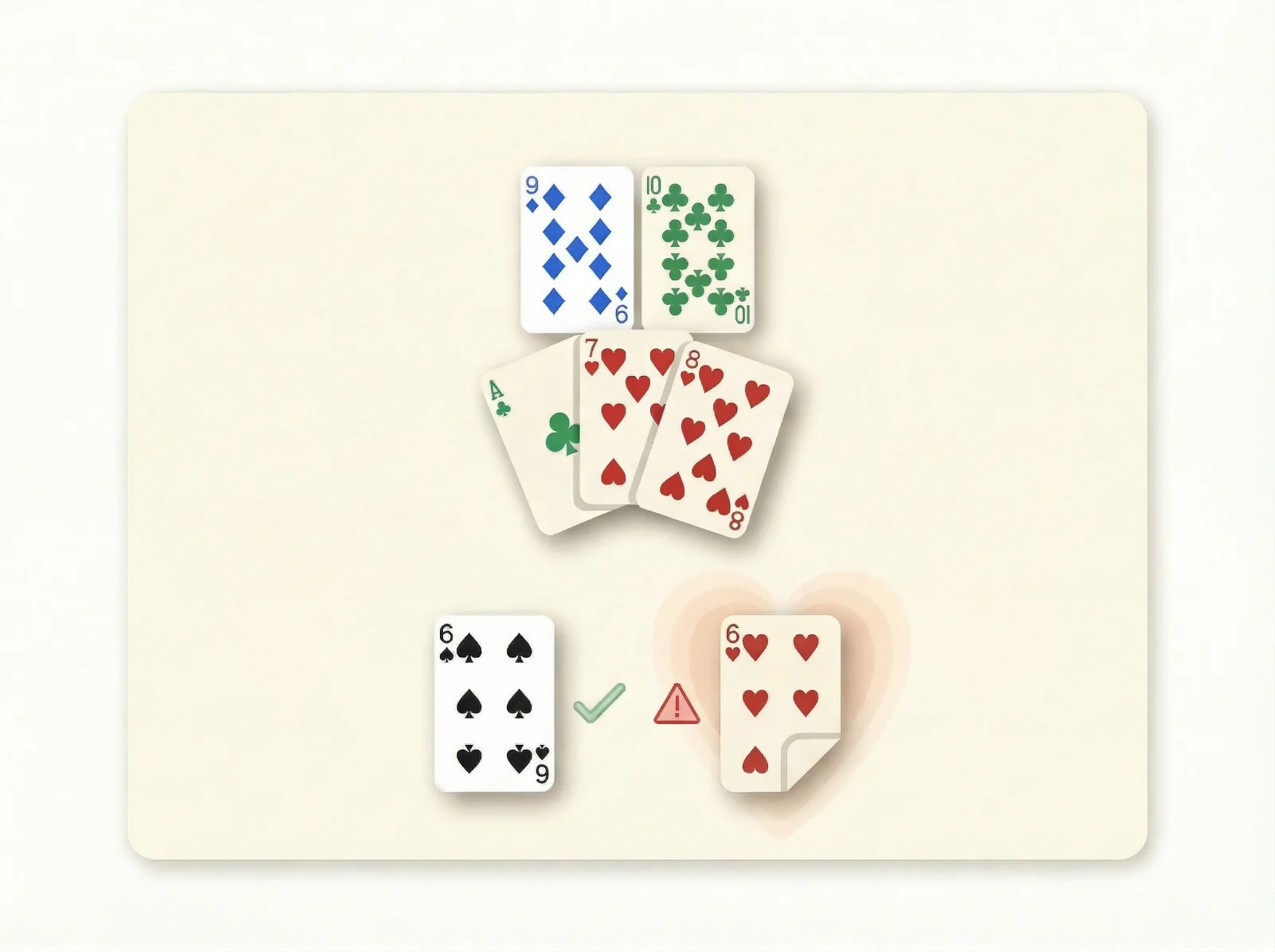
Clean outs vs dirty outs (simple contrast)
- Clean outs: when you hit, you’re usually winning.
- Dirty outs: when you hit, you might still be behind, or you might be setting yourself up for reverse implied odds.
Dirty outs often show up when your draw is dominated or when a card that helps you can also improve an opponent to an even stronger hand. They are the textbook source of reverse implied odds.
The 3 most common dirty-out patterns
1) Non-nut flush draws
If you’re drawing to a flush that isn’t the nut flush, some of your flush outs can be dirty.
Example: you have a small flush draw, but your opponent can have a higher flush draw.
2) Straight draws where the straight card completes a flush
Sometimes the card that completes your straight also completes a flush on board.
So you hit, but you still lose to the flush.
3) Draws vs sets (board-pair risk)
Against a set, you can hit your draw and still lose when the board pairs into a full house.
How to discount outs
You don’t need perfect math. You need a sane discount.
Rule of thumb:
- If an out is almost always good -> count it as 1 out
- If an out is sometimes good, sometimes trouble -> count it as 0.5 out
- If an out is often losing you money when you hit -> count it as 0 outs
Then use your normal shortcut:
Worked examples
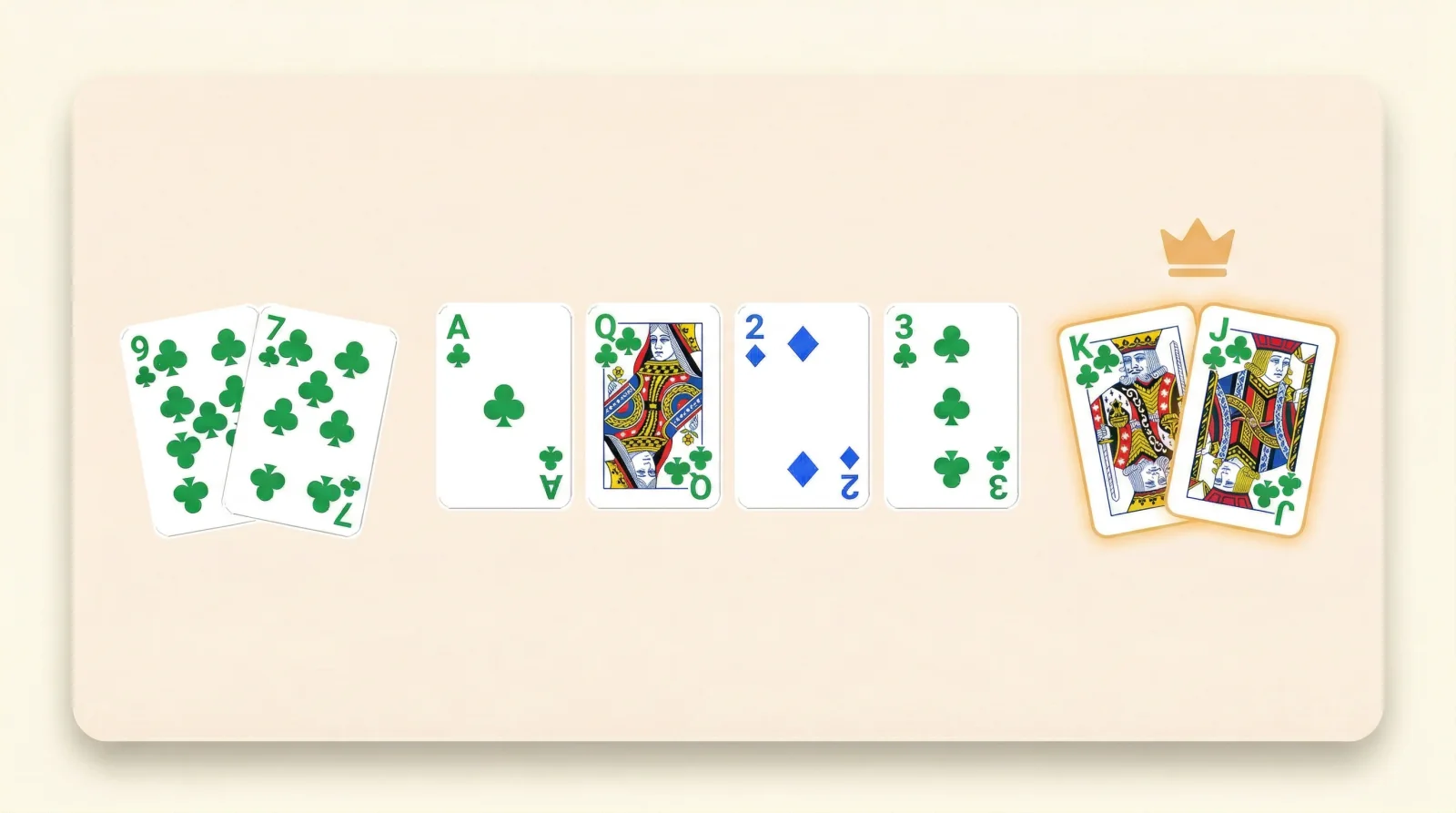
Example 1: Non-nut flush draw (dirty outs)
Hand: 9♣ 7♣
Flop: A♣ Q♣ 2♦
You have a flush draw. Naively, you might say “9 outs.”
But if your opponent can have a higher club draw - for example K♣ J♣ on this A♣Q♣x board - then when a club hits:
- you might make a flush
- they might make a better flush
That means some of your apparent flush outs are dirty and should be discounted.
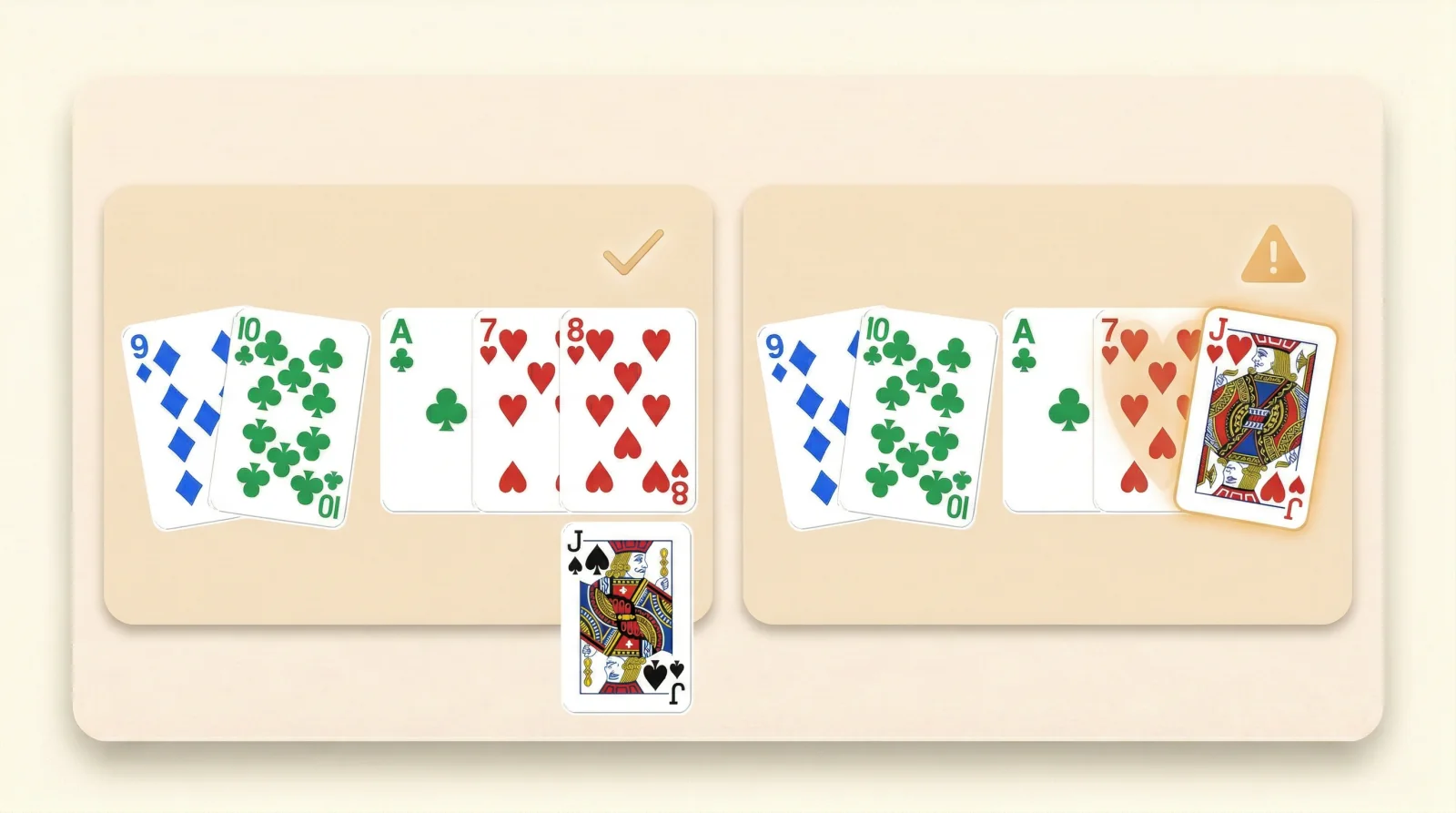
Example 2: Straight out that also completes a flush
Hand: 9♦ 10♣
Flop: A♣ 7♥ 8♥
You’re drawing to a straight with any 6 or J.
But 6♥ and J♥ complete your straight and complete a heart flush.
Those are often dirty outs - you can hit your straight and still lose.
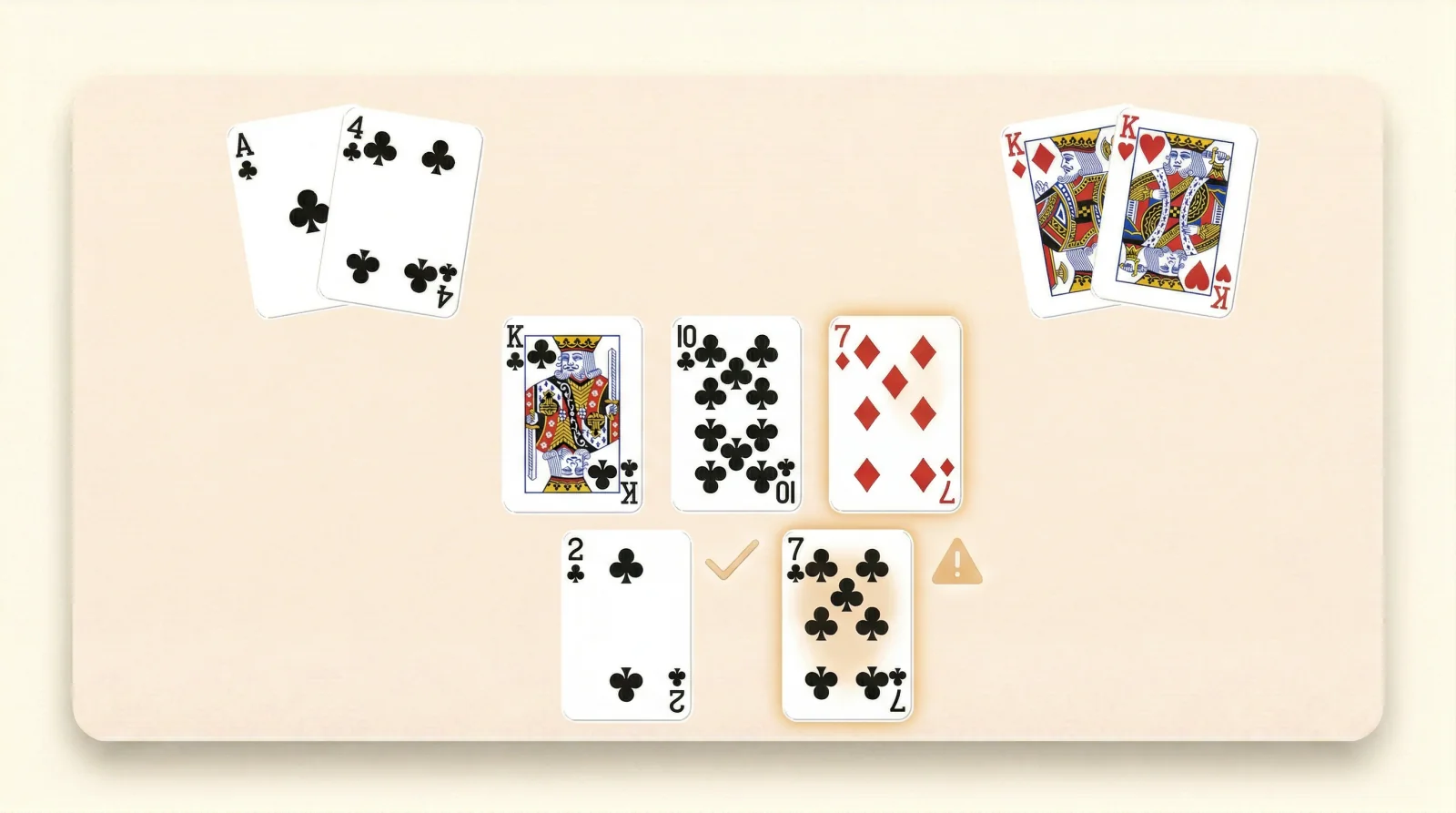
Example 3: Flush draw vs set (board-pair / full-house risk)
Hand: A♣ 4♣
Flop: K♣ T♣ 7♦
You have a flush draw and might start with the usual 9 outs.
But if your opponent has a set - for example K♦ K♥ - your equity can be diluted:
- you can hit a club and make a flush
- later board-pair runouts can still give them a full house
That’s a classic spot where not all outs are equally clean.
Dirty outs are really about future money
Dirty outs matter because of reverse implied odds:
- you hit a card that makes you feel strong
- you put more money in
- you’re still behind, or can easily become second best
That’s why strong players care not just about whether they can hit, but whether they’ll actually be good when they do.
FAQ
What’s the difference between clean outs and dirty outs?
Clean outs usually make you the best hand. Dirty outs can improve you while still leaving you behind.
How do I discount outs?
Use a simple rule of thumb: count clearly good outs as 1, marginal outs as 0.5, and dangerous outs as 0.
Are non-nut flush outs dirty?
They can be, especially when ranges include higher flush draws.