


Equity Denial
Equity denial means betting so opponents fold hands with live outs and cannot realize their equity for free. You only deny equity if they actually fold.
Practice this in Poker Skill. Q♣ 10♠ on 9♦ Q♥ 7♠ bets in the c-bet lessons because top pair is vulnerable there, and the bet makes the straight draws pay or fold instead of taking a free card.
Get the free appEquity denial (denying equity): quick definition
Equity denial — often phrased as denying equity — is when you bet and make an opponent fold a hand that still has a meaningful chance to improve.
In plain English: you make them pay now, or fold now, instead of letting them see more cards cheaply.
That last detail matters. You only deny equity if they fold. If they call, they still get to realize their equity, even if your bet charged them a price to continue.
A useful mental shortcut:
- Fold from a hand with live outs = you denied equity.
- Call from that same hand = you mostly charged them, but you did not fully deny the equity.
Related terms:
Equity denial vs protection, value, and bluffing
Players often say they are betting for “protection.” In practice, that usually points at equity denial.
But it helps to separate the ideas clearly:
| Bet type | What you want Villain to do | Why you bet |
|---|---|---|
| Value bet | Call with worse | Win more from weaker hands |
| Bluff | Fold better | Win the pot immediately |
| Protection / equity denial | Fold hands with live outs | Stop those hands from realizing future equity |
| Thin range / small pressure bet | Continue imperfectly or overfold | Mix pressure, realization denial, and range advantage |
Many bets do more than one job. A flop c-bet can simultaneously target folds from overcards, get called by worse pairs, and set up later barrels. The key is not to label every bet “equity denial” by default.
Ask the practical question instead: does this sizing actually make worse drawing hands fold often enough?
When equity denial matters most
Equity denial matters most on dynamic boards where many turn and river cards can change who is ahead.
That usually means:
- boards with straight or flush draws
- spots where Villain has many overcards, backdoors, or pair-plus-draw hands
- heads-up pots where fold equity is still meaningful
- situations where your sizing creates real pressure
It matters less when:
- the board is relatively static
- the pot is multiway and folds are harder to generate
- your opponent is getting a great price or is unlikely to fold draws
- the continuing range is already strong and sticky
If you want more context, see board texture, dynamic board, and static board.
Example 1: Denying equity to overcards and backdoors
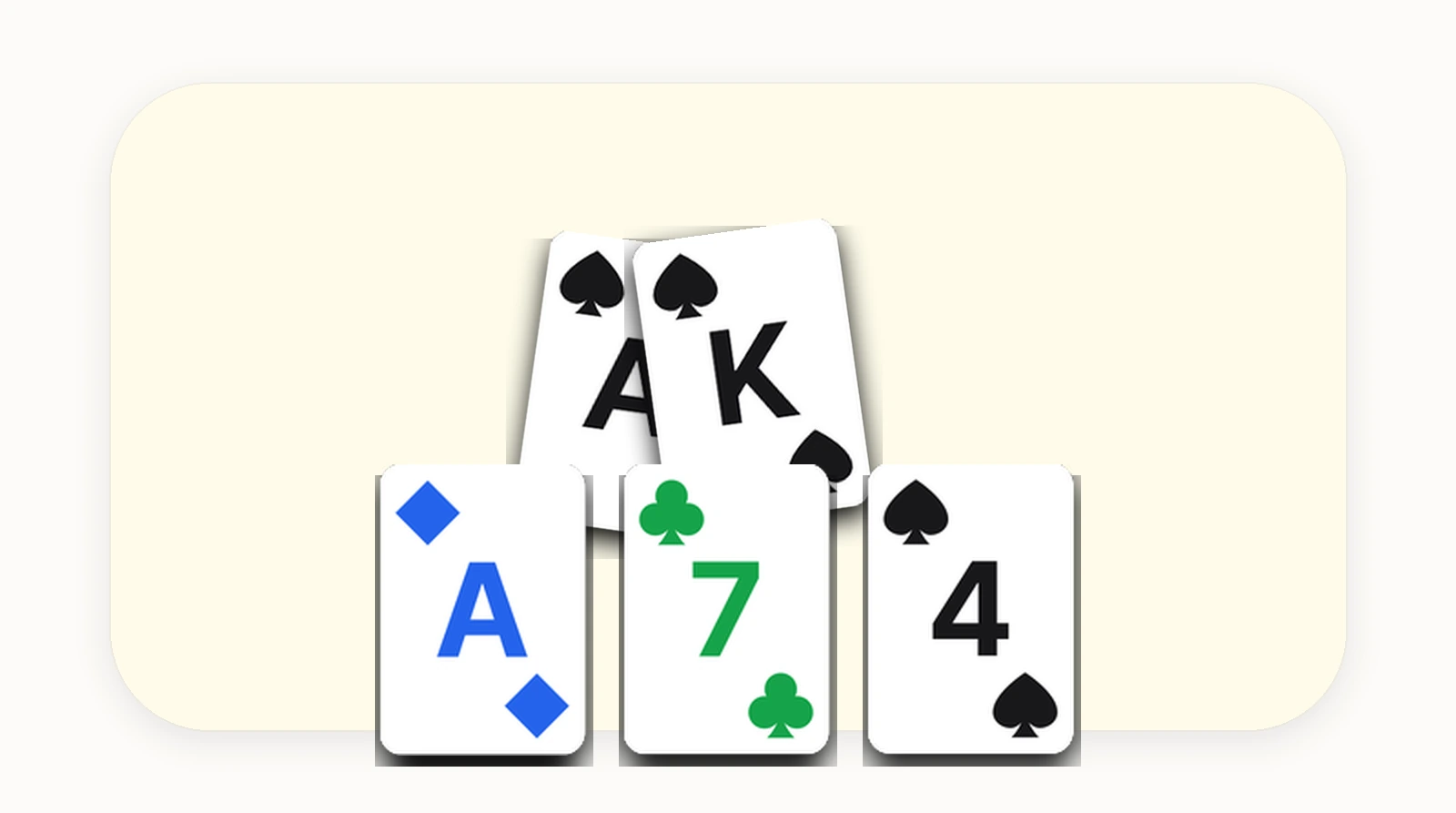
Scenario (single-raised pot, in position):
- Button opens, Big Blind calls — you are IP.
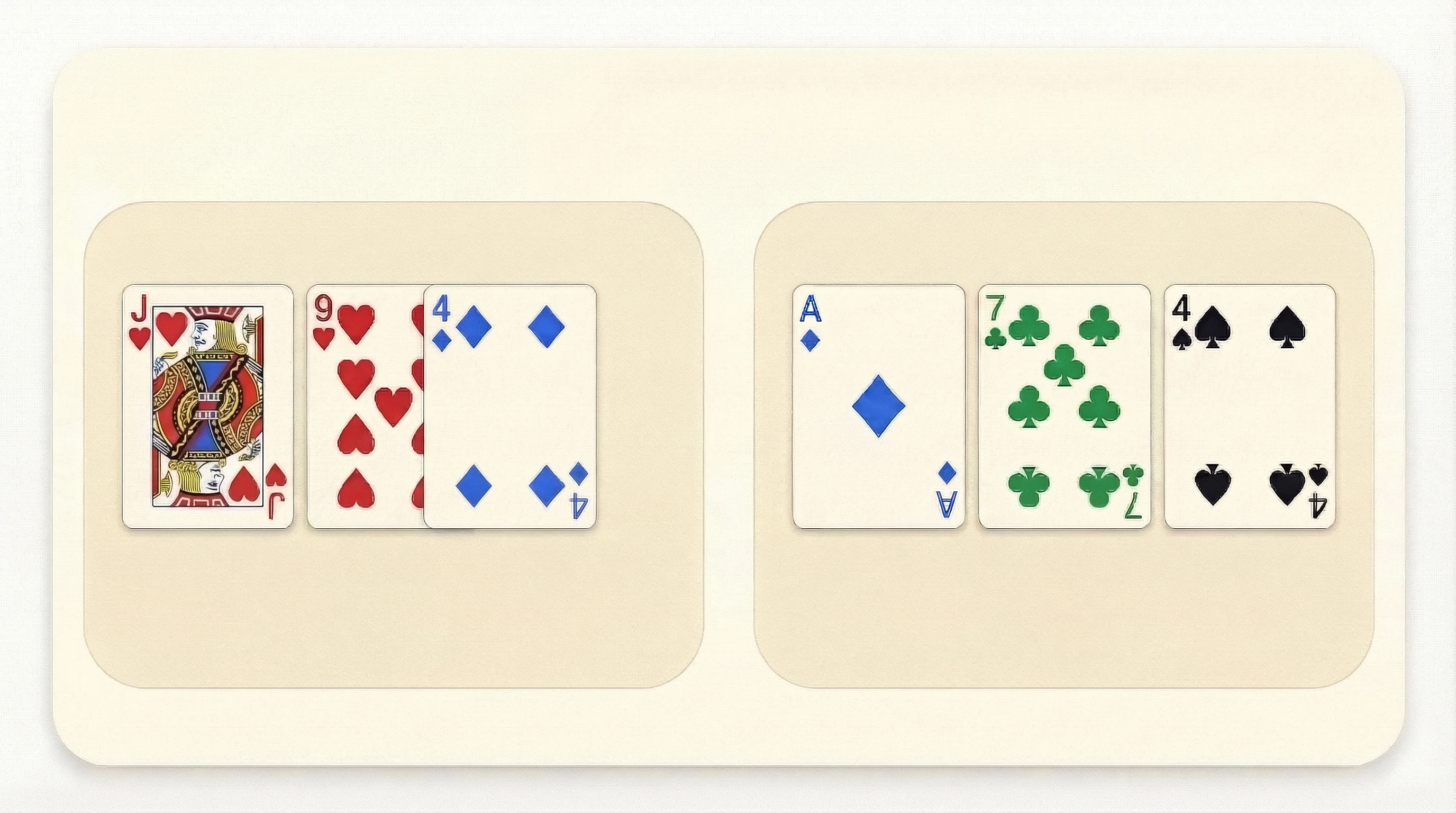
- Flop: A♦ 7♣ 4♠
- Hero: A♠ K♠
Your opponent can easily arrive here with hands like KQ, QJ, 98s, or small backdoor holdings that are behind now but still have ways to improve.
A small flop c-bet — often around 25% to 33% pot — can deny equity from that part of the range when those hands fold.
If they fold, you denied the chance to:
- pair an overcard on the turn or river
- pick up additional equity on later streets
- realize their hand more cheaply than it deserves
If they call, you did not really deny much. You mostly built a pot while still allowing them to continue.
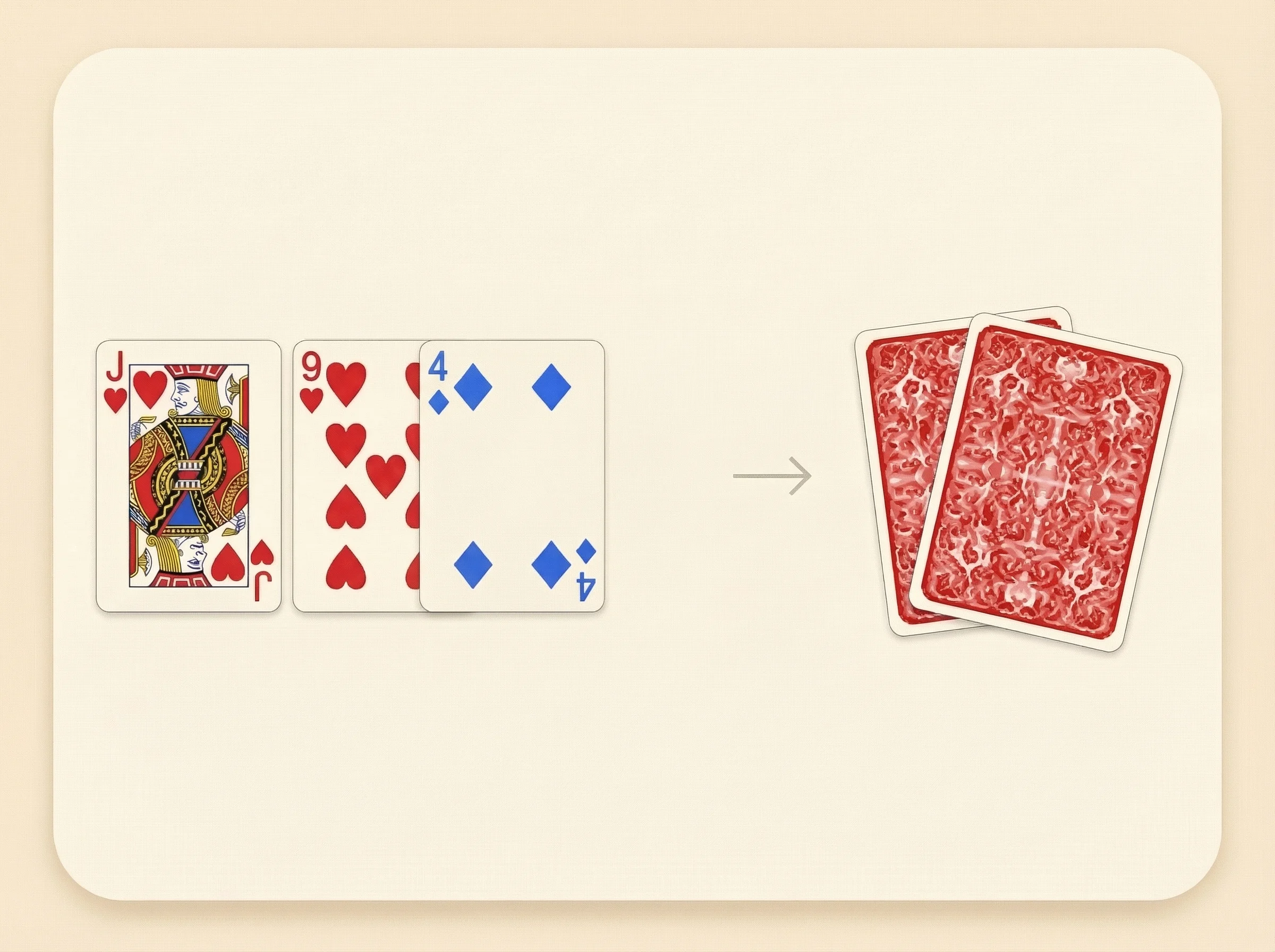
Example 2: Draw-heavy board and real sizing pressure
Scenario (single-raised pot, out of position):
- You open preflop, Big Blind calls — you are OOP.
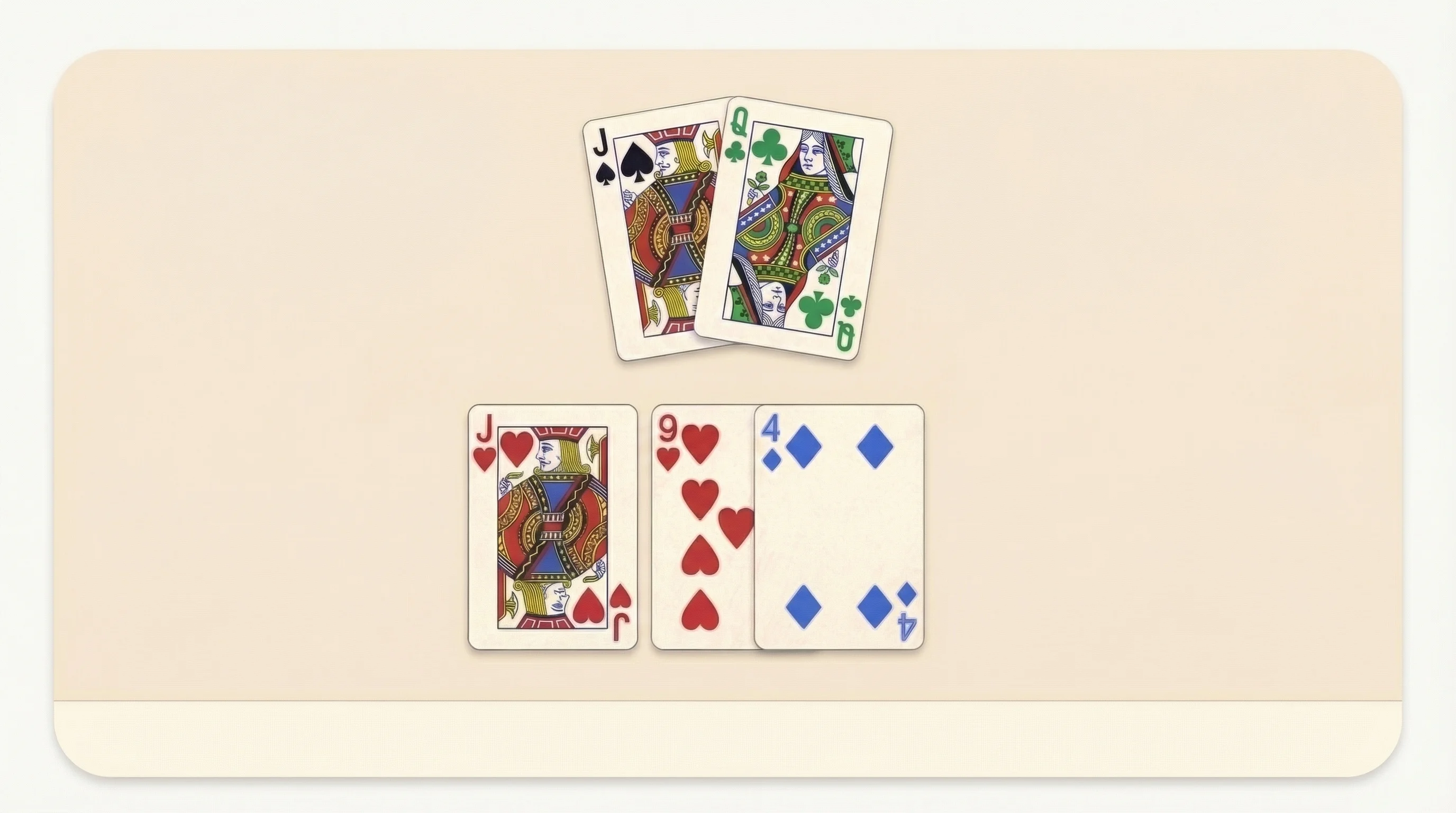
- Flop: J♥ 9♥ 4♦
- Hero: J♠ Q♣
Here Villain can have heart draws, straight draws, pair-plus-draw hands, and overcard-plus-backdoor hands. Those holdings often retain real equity against top pair.
A small range bet size such as 25% pot may get called by most of the hands you were hoping to push out. In that case, the bet is not denying much equity.
A larger size — say 60% to 75% pot — can create more folds from the weakest draws and overcards. That is where equity denial becomes more real.
The important point is honesty about the mechanism:
- if your sizing plus opponent type makes those hands fold often enough, you are denying equity
- if those draws continue anyway, you are mostly charging them or value-betting a vulnerable made hand
Common mistakes
1) Calling every protection bet “equity denial”
Not every protection bet truly denies equity. If the hand you target keeps calling, the fold never happened.
2) Ignoring board texture
On dry, static boards, the value of denial often drops. On wet, dynamic boards, it rises fast.
3) Forgetting multiway reality
In a multiway pot, fold equity drops and pure denial lines work less often.
4) Using the wrong size for the goal
If your goal is folds from live draws, the bet size must actually pressure those hands. A token size often fails that test.
FAQ
Is equity denial the same as a protection bet?
Usually they point at the same idea, but equity denial is the cleaner description because it highlights the key condition: the opponent has to fold.
Can you deny equity if they always call?
Not really. If they always continue, your bet may still be good, but it is mostly about value, charging draws, or building the pot.
What bet sizes deny equity best?
There is no single best size. The right size depends on board texture, stacks, position, and how often your opponent will actually fold.
Why does equity denial matter more in heads-up pots?
Because folds are easier to generate heads-up. Once several players remain, someone is more likely to continue, which reduces how often a bet actually denies equity.